
Your return policy isn't just legal text hidden in your website footer. During the holiday season, it becomes one of the most-read pages on your entire site—and a major driver of support tickets flooding your inbox.
The policy itself matters less than how you communicate it. A generous 60-day return window means nothing if customers can't find it, don't understand it, or email you three times trying to figure out how gift returns actually work.
I watched this play out with a Shopify store owner last December. She had a perfectly reasonable return policy—extended holiday window, free return shipping, the works. But her inbox exploded anyway. Why? Because her order confirmation said nothing about returns. Her help center buried the holiday extension in paragraph four of a wall of text. And her support replies were so brief that customers sent follow-up emails asking the same questions in slightly different ways.
The fix wasn't changing her policy. It was translating that policy into clear messaging at every point where customers actually look for answers.
This guide walks you through that translation—from support replies to order confirmations to your help center. We'll cover the specific language that prevents tickets, the templates that sound human while being comprehensive, and the help center structure that intercepts questions before they reach your inbox.
Why Holiday Return Policies Need Different Messaging
Standard return policies work fine for everyday orders. But holiday shopping introduces complications that most policies weren't built to handle—and your messaging needs to account for them explicitly.
Gift Purchases Create a Documentation Gap
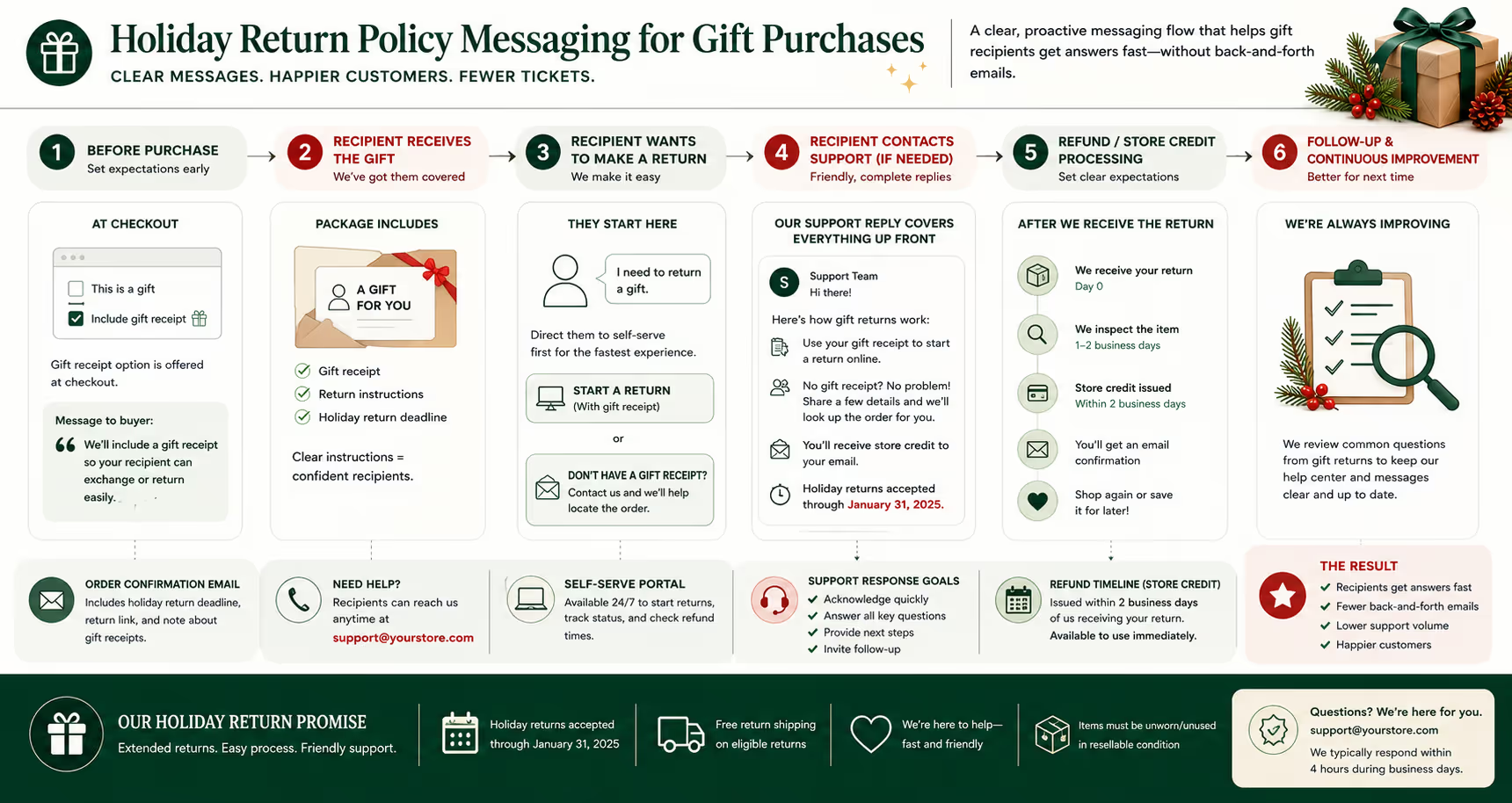
The buyer has the receipt and order confirmation. The recipient has neither. When Aunt Susan wants to exchange that sweater in January, she's starting from zero—and probably emailing your support team for help.
This isn't a policy problem. It's a communication problem. Your messaging needs to anticipate that the person returning the item isn't the person who bought it, and provide a clear path forward for both scenarios.
Extended Return Windows Create Deadline Confusion
"60-day holiday returns" sounds straightforward until customers start asking: 60 days from purchase date or delivery date? Does it apply to sale items? What about orders placed on November 15th—does that count as "holiday"?
According to the National Retail Federation, holiday return rates run significantly higher than the rest of the year, with some product categories seeing return rates above 30% [1]. Shopify's analysis of merchant data found that return-related support inquiries spike 40-60% during the post-holiday period [2]. That's a communication opportunity, not just a logistics problem.
Refund Timing Expectations Spike
Customers aren't just returning items—they're often returning items to buy replacements. They need to know exactly when that credit hits their account so they can finish their actual shopping.
Vague language like "refunds typically process within 5-7 business days" leaves too much room for interpretation. Does that start when they ship the item back? When you receive it? When you inspect it? Every ambiguity generates emails.
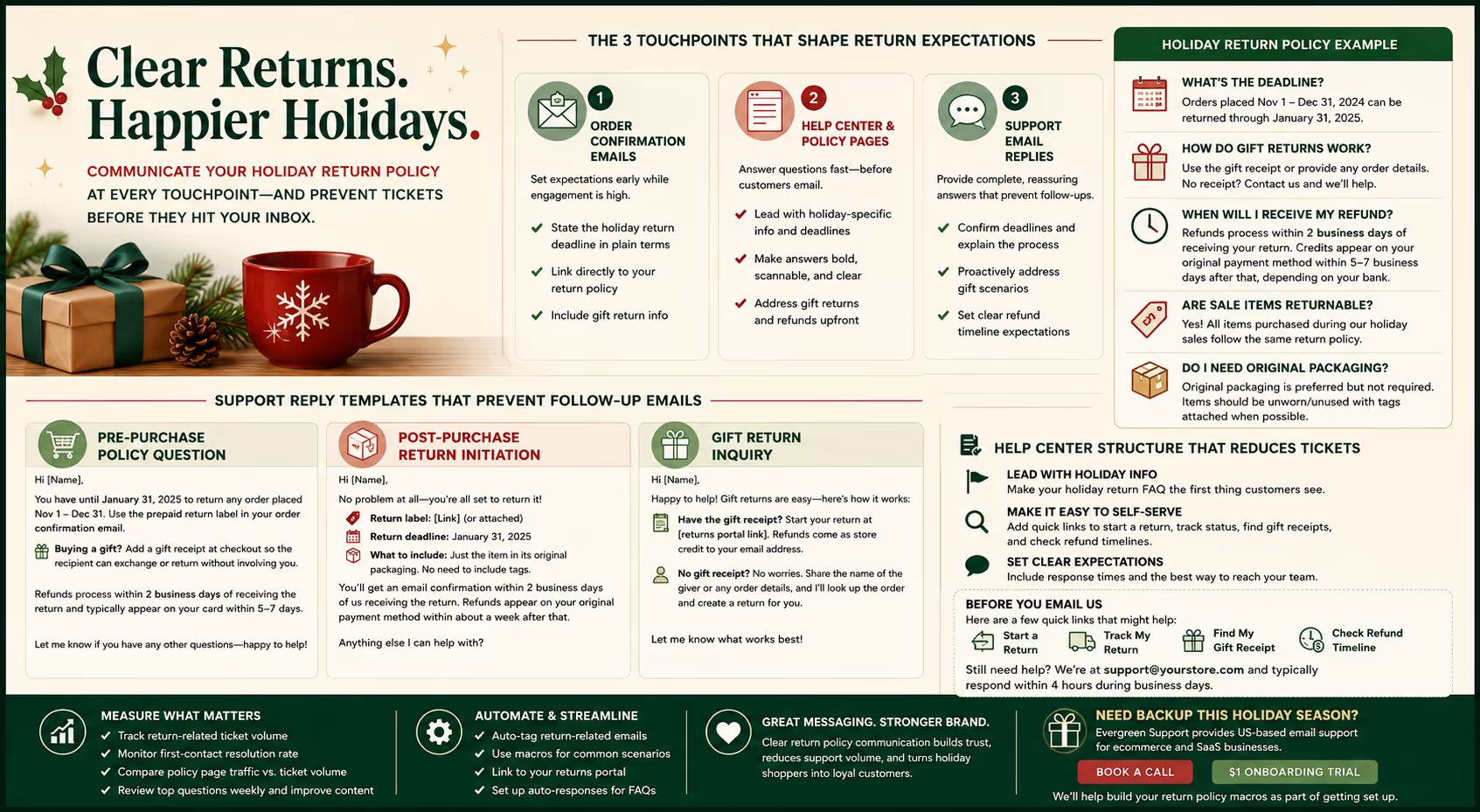
The Three Touchpoints That Shape Return Expectations
Every customer interaction either builds clarity or introduces confusion. During the holidays, three touchpoints carry most of the weight.
Order Confirmation Emails
This is your first real chance to set expectations—and most brands waste it completely.
The typical order confirmation buries return information (if it includes any at all) in tiny footer text that nobody reads. But this email gets one of the highest open rates of any message you send. Customers actively search for it to confirm their purchase went through.
What to include:
Your holiday return deadline in plain terms ("Returns accepted through January 31, 2025")
A direct link to your full return policy
For gift-eligible items, a note about gift receipt options
What to skip:
Vague language like "extended holiday returns apply"
Assuming customers will visit your website to find details
Legal jargon that requires a second read to parse
Here's what this looks like in practice:
Holiday Returns: This order can be returned through January 31, 2025. Start a return anytime at [yourstore.com/returns]. Sending this as a gift? Add a gift receipt at checkout or forward this email to your recipient.
Three sentences. Covers the deadline, the process, and the gift scenario. Done.
Help Center and Policy Pages
Your help center isn't just for people with problems. During the holidays, it's a research tool for buyers trying to decide whether to purchase from you.
Most return policy pages are written for the 5% of customers who actually need to make a return—not the 95% who want reassurance before buying.
Structure your holiday return policy page to answer questions in order of frequency:
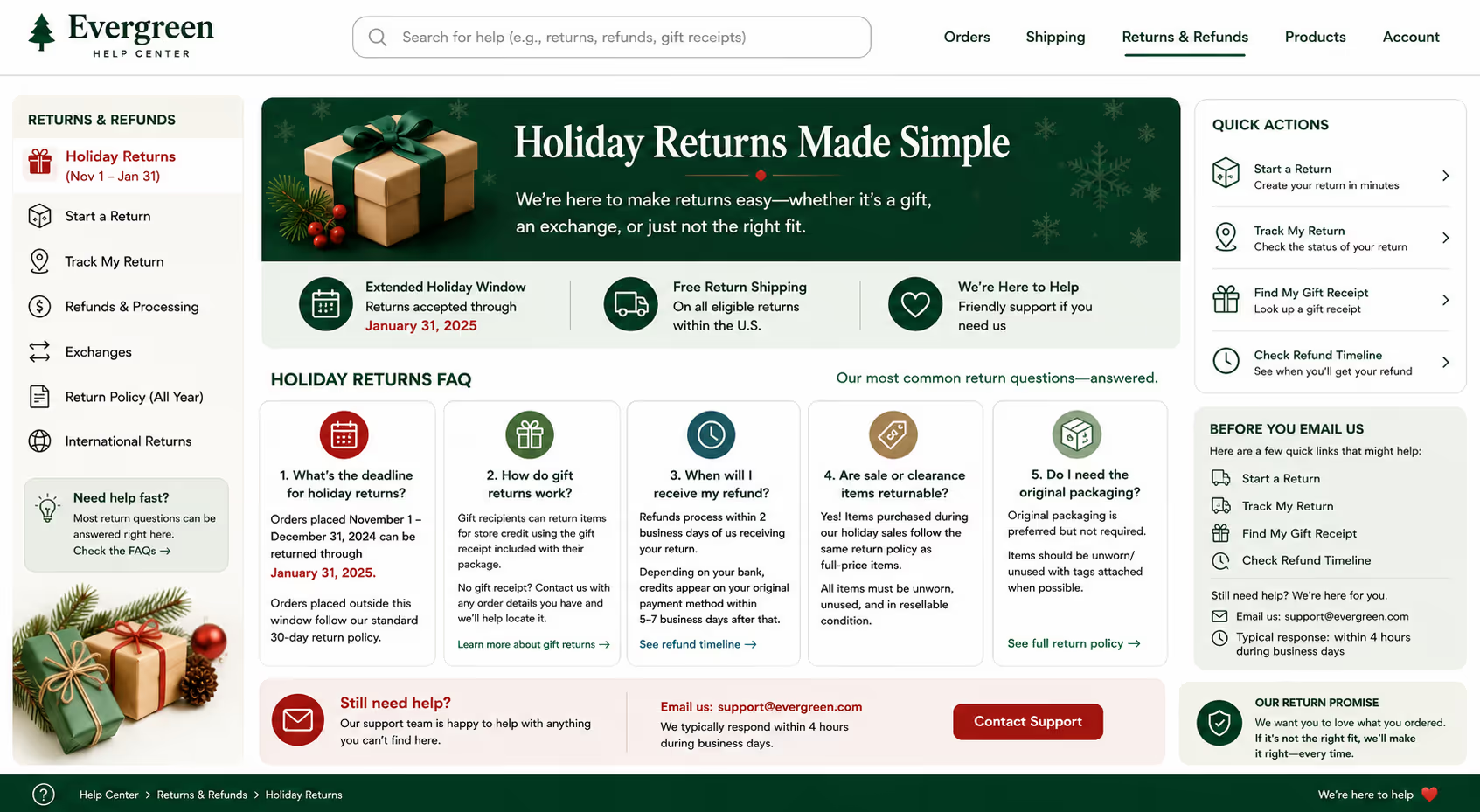
What's the deadline for holiday returns?
Do I need the original packaging?
How do gift returns work?
When will I get my refund?
Are sale items returnable?
Bold the answers. Use bullet points. Make it skimmable. A customer scanning your page should find their answer in under 10 seconds.
Zendesk's benchmark data shows that self-service resolution rates drop by 15-20% during Q4 if help content isn't updated for seasonal policies [3]. That drop translates directly into ticket volume your team has to handle.
Support Email Replies
This is where most of the actual damage happens—or gets prevented.
When a customer emails asking about returns, they're not just looking for information. They're often looking for reassurance. The tone and completeness of your reply shapes whether they buy confidently, buy nervously, or bounce entirely.
A reply that says "Please see our return policy here" with a link technically answers the question. But it signals the customer is on their own to figure things out.
Compare that to a reply that confirms the deadline, explains the process, addresses gift purchases proactively, and invites follow-up. The second approach takes 30 more seconds to write (or build as a template) and eliminates two or three follow-up emails.
Crafting Return Policy Language That Prevents Tickets
The goal isn't shorter policy text. It's policy text that answers the real questions customers have—before they email you.
Be Specific About Your Extended Return Window
"Extended holiday returns" is marketing language, not operational language. Your support inbox pays the price for that difference.
Vague (generates tickets):
"We offer extended returns for holiday purchases."
Specific (prevents tickets):
"Orders placed between November 1 and December 31, 2024 can be returned through January 31, 2025. Orders placed outside this window follow our standard 30-day return policy."
Notice the specific dates. Notice the explicit mention of what happens to orders outside the window. These details feel obvious when you write them—but customers genuinely don't know, and they will email to ask.
Address Gift Returns Directly
Gift returns are the single biggest source of holiday support confusion. The recipient doesn't have order information. The original buyer may not want to be involved. Store credit adds another layer of complexity.
Your policy should explicitly answer:
Can someone return a gift without the original receipt?
What identification or information does the recipient need?
Will the refund go to the original purchaser or as store credit to the recipient?
How does the recipient start a return?
Example language:
"Gift recipients can return items for store credit using the gift receipt included with their package or by providing the order number from the original buyer. No original receipt? Contact us at support@yourstore.com with the item details and we'll locate the order for you."
That last sentence matters. It tells gift recipients there's a path forward even if they have nothing—and it tells them exactly how to start.
Clarify Refund Timing Language
Refund timing is where vague language costs you the most follow-up emails. Break the timeline into steps so customers understand what's happening at each stage.
Vague (generates "where's my refund?" emails):
"Refunds typically process within 5-7 business days."
Specific (sets clear expectations):
"Once we receive your return, we'll inspect the item and process your refund within 2 business days. You'll see the credit on your original payment method within 5-7 business days after that, depending on your bank."
Breaking the timeline into steps helps customers understand what's happening and reduces "where's my refund?" emails during the waiting period.
Building Support Macros That Sound Human
Templates save time. Bad templates cost sales.
The difference between a macro that helps and one that hurts comes down to completeness and tone. A good template anticipates follow-up questions and sounds like it was written for this specific customer—even though it wasn't.
Pre-Purchase Return Policy Questions
Customers asking about your return policy before buying are often one reassuring answer away from checkout.
Template:
Hi [Name],Great question! Here's the quick version: you have until January 31, 2025 to return any order placed during our holiday season (November 1 – December 31).For returns, just use the prepaid shipping label in your order confirmation email. Once we receive the item, refunds process within 2 business days and typically appear on your card within a week after that.Buying a gift? We include a gift receipt option at checkout that lets the recipient exchange or return without involving you.Let me know if you have any other questions—happy to help!
This template states the deadline, explains the process, addresses gift purchases proactively, and invites follow-up. Comprehensive without being overwhelming.
Post-Purchase Return Initiation
Once someone decides to return, your job is making the process frictionless. Confusion at this stage creates frustration—and negative reviews.
Template:
Hi [Name],No problem at all—I've pulled up your order and you're all set to return it.Here's what you need:Return label: [Link] (or attached to this email)Return deadline: January 31, 2025What to include: Just the item in its original packaging. No need to include tags if they've been removed.Once we receive the return, you'll get an email confirmation within 2 business days. The refund will appear on your original payment method within about a week after that.Anything else I can help with?
The bullet format makes this scannable. The customer can save this email and reference it without re-reading paragraphs.

Gift Return Inquiries
Gift recipients often feel awkward asking about returns. Your reply should make the process feel normal and straightforward.
Template:
Hi [Name],Happy to help with this! Gift returns are easy—here's how it works:If you have the gift receipt that came with the package, you can start your return at [returns portal link]. The refund will come as store credit to your email address.Don't have the gift receipt? No worries. If you can share the name of the person who sent the gift or any details about when it arrived, I can look up the order and create a return for you.Just let me know what works best!
This acknowledges both scenarios (has receipt / doesn't have receipt) and gives a clear path forward for each.
Help Center Structure That Reduces Support Volume
Your return policy help center page shouldn't just explain your policy. It should intercept the questions heading to your inbox.
Lead With Holiday-Specific Information
During November through January, your holiday return policy should be the first thing customers see—not buried under your standard policy.
Consider a dedicated "Holiday Returns FAQ" section at the top of your returns page:
What's the deadline for holiday returns?Orders placed November 1 – December 31, 2024 can be returned through January 31, 2025.
How do gift returns work?Gift recipients can return items for store credit using the gift receipt included with their package. No gift receipt? Contact us with any order details you have and we'll help locate it.
When will I receive my refund?Refunds process within 2 business days of us receiving your return. Depending on your bank, credits appear within 5-7 business days after that.
Are sale or clearance items returnable?Yes, items purchased during our holiday sales follow the same return policy as full-price items.
Do I need the original packaging?Original packaging is preferred but not required. Items should be unworn/unused with tags attached when possible.
Add a "Before You Email Us" Section
This isn't passive-aggressive—it's genuinely helpful. Many customers prefer self-service if you make it easy.
Example:
Before reaching out, here are a few quick links that might help:Start a returnTrack my return statusFind my gift receiptCheck refund timelineStill need help? We're at support@yourstore.com and typically respond within 4 hours during business days.
This structure respects customers' time while reducing repetitive tickets for your team.
Setting Up Automated Return Workflows in Your Helpdesk
If you're using a helpdesk platform like Gorgias, Zendesk, or Help Scout, you can route return-related inquiries to pre-built responses or tag them for faster handling.
Here's how to set this up in practice:
Create intent-based tags or rules. Set up auto-tagging for emails containing phrases like "return," "refund," "exchange," or "gift return." Most helpdesks let you do this with simple keyword rules.
Build macro categories for each return scenario. Organize your templates by situation (pre-purchase inquiry, return initiation, gift return, refund status) so agents can find the right response in one click.
Connect to your returns portal. If you use a returns management tool like Loop Returns, Returnly, or Happy Returns, make sure your help center links directly to the self-serve flow. The less friction between "I want to return this" and "my return is started," the fewer support touches required.
Set up auto-responses for common return questions. During peak season, consider automated first responses that acknowledge the inquiry and provide immediate links to your returns portal and FAQ. This buys your team time while giving customers something actionable immediately.
The goal is getting customers to resolution faster—whether that's through self-service or a well-prepared agent with the right template ready.
Measuring Whether Your Messaging Is Working
You won't know if your messaging changes are working without tracking the right metrics.
Track Return-Related Ticket Volume
Tag or categorize support tickets related to returns. Compare week-over-week during the holiday season and year-over-year if you have historical data.
Questions to answer:
What percentage of total tickets are return-related?
What specific return questions come up most often?
Are customers asking questions that should be answered by your policy page?
If you're seeing the same questions repeatedly, that's a signal your proactive messaging isn't reaching customers—or isn't clear enough.
Monitor First-Contact Resolution Rate
For return-related tickets specifically, track how often the first reply fully resolves the issue versus how often back-and-forth is required.
A high first-contact resolution rate suggests your templates are comprehensive. A low rate means your replies are creating more questions than they answer.
Watch for Policy Page Traffic vs. Ticket Volume Correlation
Ideally, as traffic to your return policy page increases during the holidays, your return-related ticket volume should not increase proportionally.
If both spike together, customers are reading your policy and still not finding answers—which points to a content problem, not a traffic problem.
The Support Team's Role in Policy Improvement
Your support team sees what your policy pages miss. They know which questions come up constantly, which phrases confuse customers, and which edge cases aren't addressed.
Build a simple feedback loop:
Weekly: Support team flags the top 3 return-related questions that existing documentation doesn't answer.
Monthly: Review flagged questions and update help center content, email templates, or order confirmation messaging accordingly.
Annually (pre-holiday): Audit all return-related content based on previous year's ticket data and update proactively.
This turns support from a reactive function into a content improvement engine. One ecommerce brand we worked with cut their holiday return-related ticket volume by 35% in a single season just by closing the gap between what customers asked and what documentation answered. The fix wasn't a policy change—it was adding three FAQ entries and rewriting their order confirmation email.
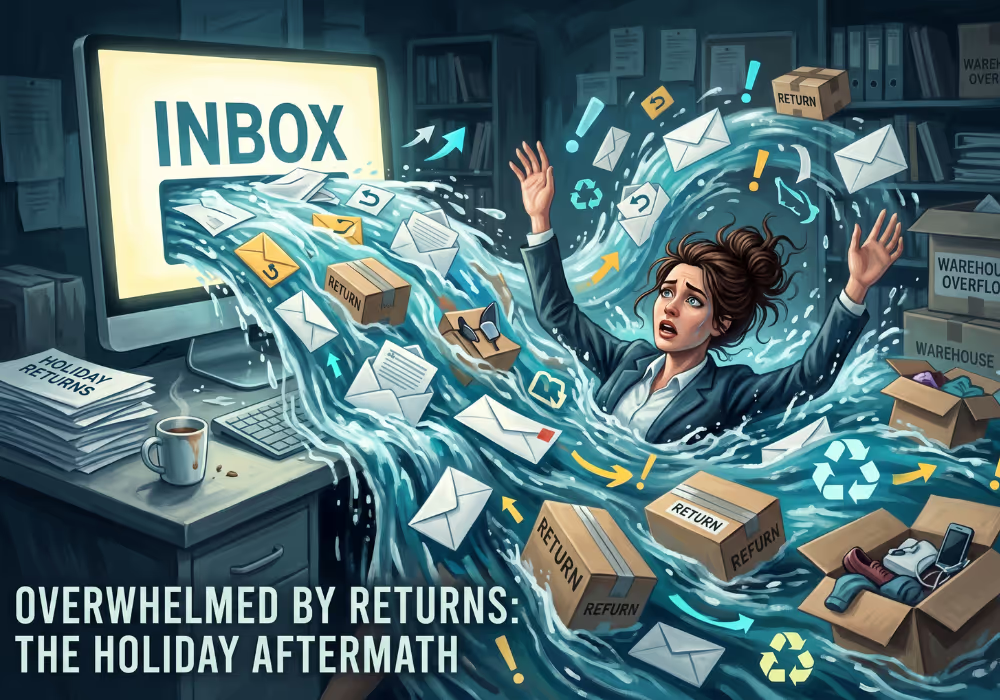
Ready to Stop Drowning in Holiday Return Emails?
Better messaging prevents tickets. But during the holiday rush, even optimized messaging won't eliminate the volume entirely.
If your inbox is already overwhelming your team—or you want to head into the holidays with experienced backup—Evergreen Support provides US-based email support coverage for ecommerce and SaaS businesses. We handle the day-to-day tickets (including return questions) so you can focus on what actually grows your business.
Book a call to discuss holiday support coverage, or start with our $1 onboarding trial to see how it works. We'll help build out your return policy macros as part of getting set up.
Frequently Asked Questions
How far in advance should I update my return policy messaging for the holidays?
Update your help center and policy pages by early October, before Black Friday traffic starts. Order confirmation email changes should be live by November 1st at the latest. This gives you time to catch confusing language before your busiest period and make adjustments based on early feedback. If you're also building new support macros, give your team at least two weeks to practice using them before volume spikes.
Should I offer different return windows for different product categories?
Simplicity usually wins. If you must have different windows (electronics vs. apparel, for example), make the distinction extremely clear on product pages and in order confirmations. Multiple policies increase confusion and ticket volume—only add complexity if the business case is strong and you're willing to manage the support overhead. When in doubt, extend the more generous policy to all categories during the holiday period.
How do I handle return policy questions on live chat or social media?
Use the same language and level of detail as your email templates. Consistency across channels is critical. A customer who gets one answer via Instagram DM and a different answer via email will lose trust—and create escalation tickets that take even longer to resolve. Keep a shared document with your approved return policy language that anyone responding to customers can reference.
What's the best way to communicate a policy change mid-season?
Email existing customers directly if the change affects orders they've already placed. Update your website immediately. And brief your support team before the public announcement so they're ready for incoming questions with accurate information. For significant changes (like shortening a return window), consider honoring the original policy for orders placed before the announcement to avoid backlash.
How can I reduce gift return confusion without eliminating gift receipts entirely?
Include gift receipt instructions in your order confirmation email and make digital gift receipts available through your account portal. The more ways recipients can access return information, the fewer tickets you'll receive from people who "lost the receipt" or never received one in the first place. Some brands also include a small card in the package with return instructions and a QR code linking to the returns portal—no order number required for the recipient to start the process.
Why Trust This Advice?
Evergreen Support handles thousands of customer support emails monthly for ecommerce and SaaS businesses across the US, UK, and EU. We've seen which return policy approaches generate tickets—and which ones prevent them. This guide reflects patterns we observe across real inboxes, not theoretical best practices.
Our team specializes in helping small online businesses deliver fast, human support without burning out founders or hiring full-time staff. When it comes to holiday return messaging, we've both written the templates and answered the tickets that result from unclear policies.
Works Cited
[1] National Retail Federation — "Consumer Returns in the Retail Industry." https://nrf.com/research/consumer-returns-retail-industry
[2] Shopify — "Ecommerce Returns: Best Practices for 2024." https://www.shopify.com/blog/ecommerce-returns
[3] Zendesk — "Customer Service Benchmark Report." https://www.zendesk.com/blog/customer-service-benchmark-report/


