
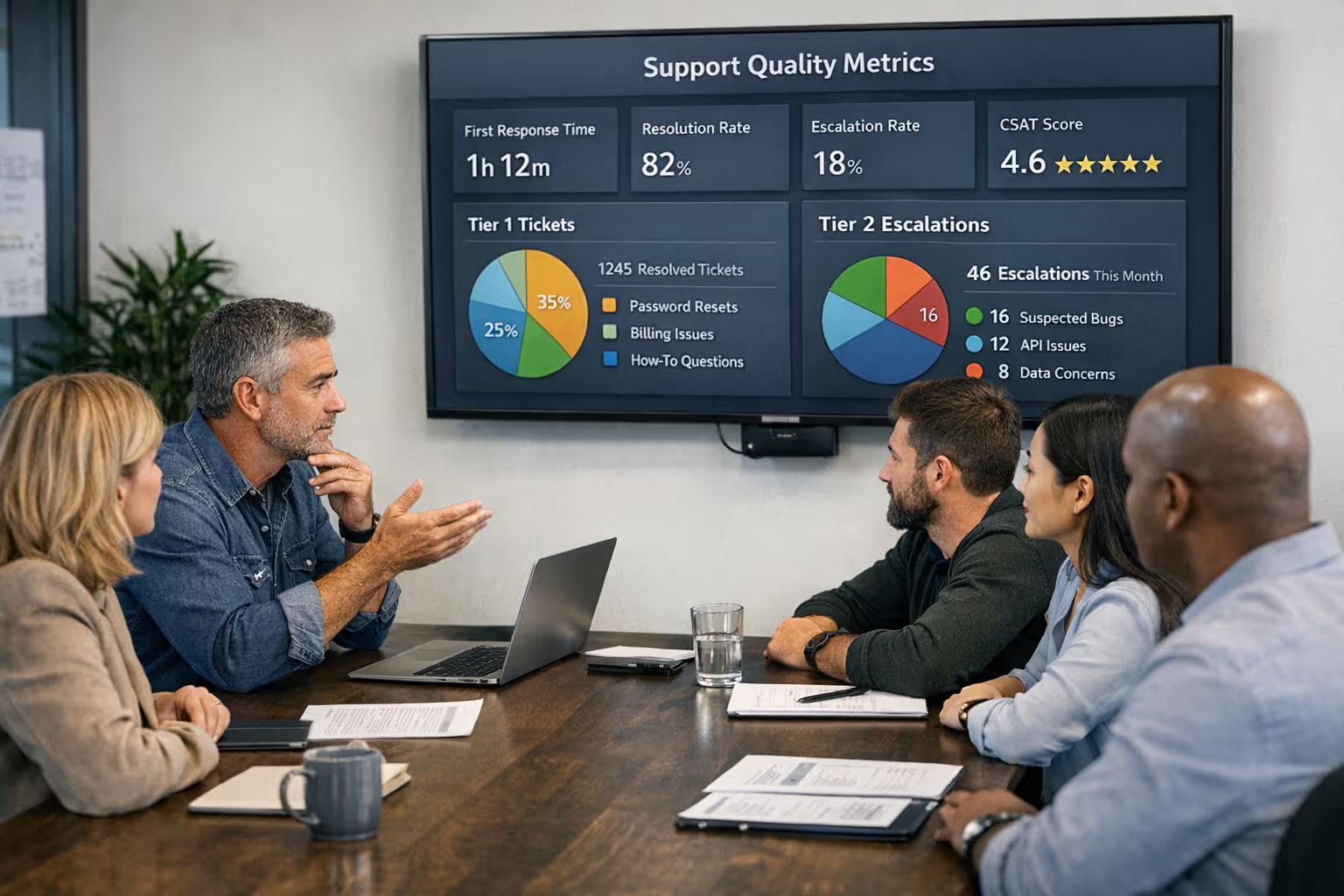
Somewhere between the fifteenth password reset email and the bug report that definitely needs engineering's attention, you've probably had this thought: There has to be a better way.
Outsourcing technical support seems like the obvious answer. But SaaS support isn't like answering questions about shipping times. Your customers need someone who understands software behavior, can troubleshoot integrations, and knows when a weird edge case is actually a critical bug. Handing that off to strangers? That's where most founders hesitate.
The hesitation is valid, but it's usually solving for the wrong problem. The question isn't whether an external team can handle everything. It's whether they can handle the predictable 70% while routing the rest to your team faster and with better documentation than you're getting now.
Key takeaways:
Most SaaS support tickets (60-80%) are Tier 1 issues that don't require engineering access
A clear escalation matrix is the single most important tool for maintaining quality
Fractional teams work particularly well for SaaS because of spiky volume and written-first support
The right onboarding process includes a review period where you approve responses before they go live
Tier 1 vs Tier 2 Support: What Actually Gets Outsourced
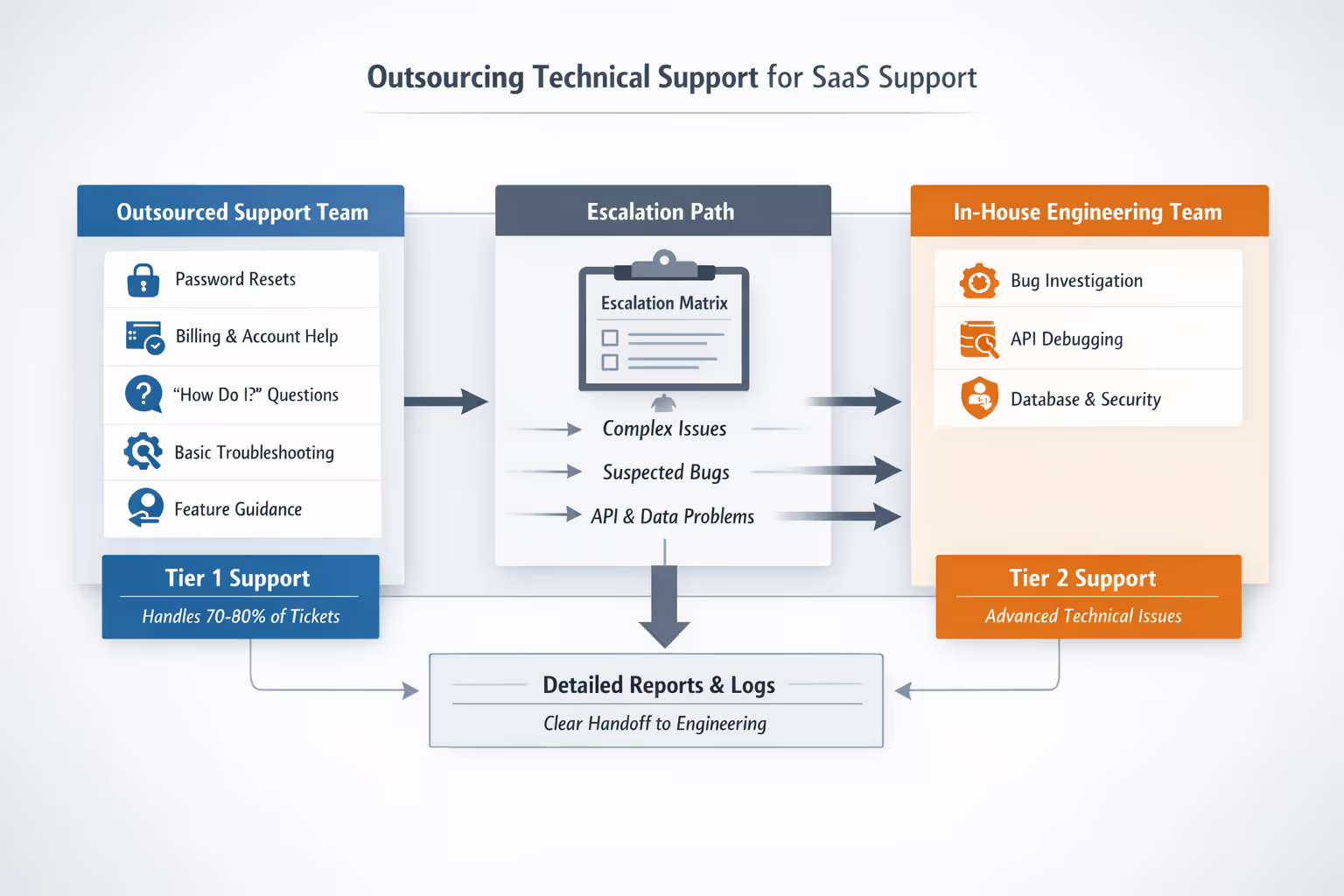
Before outsourcing anything, you need clarity on what you're handing off versus what stays with your team. This isn't about capability—it's about designing a system where the right issues reach the right people.
Tier 1: The Predictable Stuff
Tier 1 support covers issues that can be resolved using existing documentation, saved replies, and standard troubleshooting workflows. For most SaaS companies, this includes:
Password resets and authentication issues
Billing questions and subscription changes
"How do I...?" questions about existing features
Basic troubleshooting using known solutions
Account setup and configuration guidance
Feature explanations and best practice recommendations
Industry research consistently shows that roughly 60-80% of support tickets at most software companies fall into this category [1]. These tickets are repetitive, predictable, and—critically—don't require access to your codebase or database.
This is exactly where outsourcing makes sense. A well-trained fractional team can handle Tier 1 at the same quality level as someone in-house, often with faster response times because they're not context-switching between support and product work.
Tier 2: Where It Gets Technical
Tier 2 support involves issues that require deeper investigation, backend access, or direct collaboration with engineering. Think:
Suspected bugs that need reproduction and logging
Integration failures requiring API investigation
Data discrepancies that need database queries to diagnose
Security-related concerns
Issues affecting multiple users simultaneously
These tickets typically need someone with direct access to your infrastructure or engineering team. Most SaaS companies keep Tier 2 in-house, at least initially.
The Insight Most Founders Miss
You don't outsource Tier 1 or Tier 2. You outsource Tier 1 and build a clear escalation path for Tier 2.
A fractional support team doesn't need to fix your bugs. They need to identify them accurately, gather the right diagnostic information, and route them to your team efficiently. The quality of your outsourced support depends less on whether external agents can solve every problem and more on how well they triage and escalate the ones they can't.
One founder we worked with was spending 15+ hours a week on support. After mapping his tickets, we found that 73% were password resets, billing questions, and "how do I export?" requests. The remaining 27%—the actual technical stuff—was reaching his engineering team with incomplete information, causing back-and-forth that doubled resolution time. Fixing the escalation process mattered more than who answered the first email.
Building an Escalation Matrix That Actually Works
An escalation matrix sounds corporate and boring. In practice, it's the single most important document for maintaining quality when you outsource technical support.
Think of it as a decision tree that answers one question: When this happens, who handles it and how?
What Your Escalation Matrix Should Include
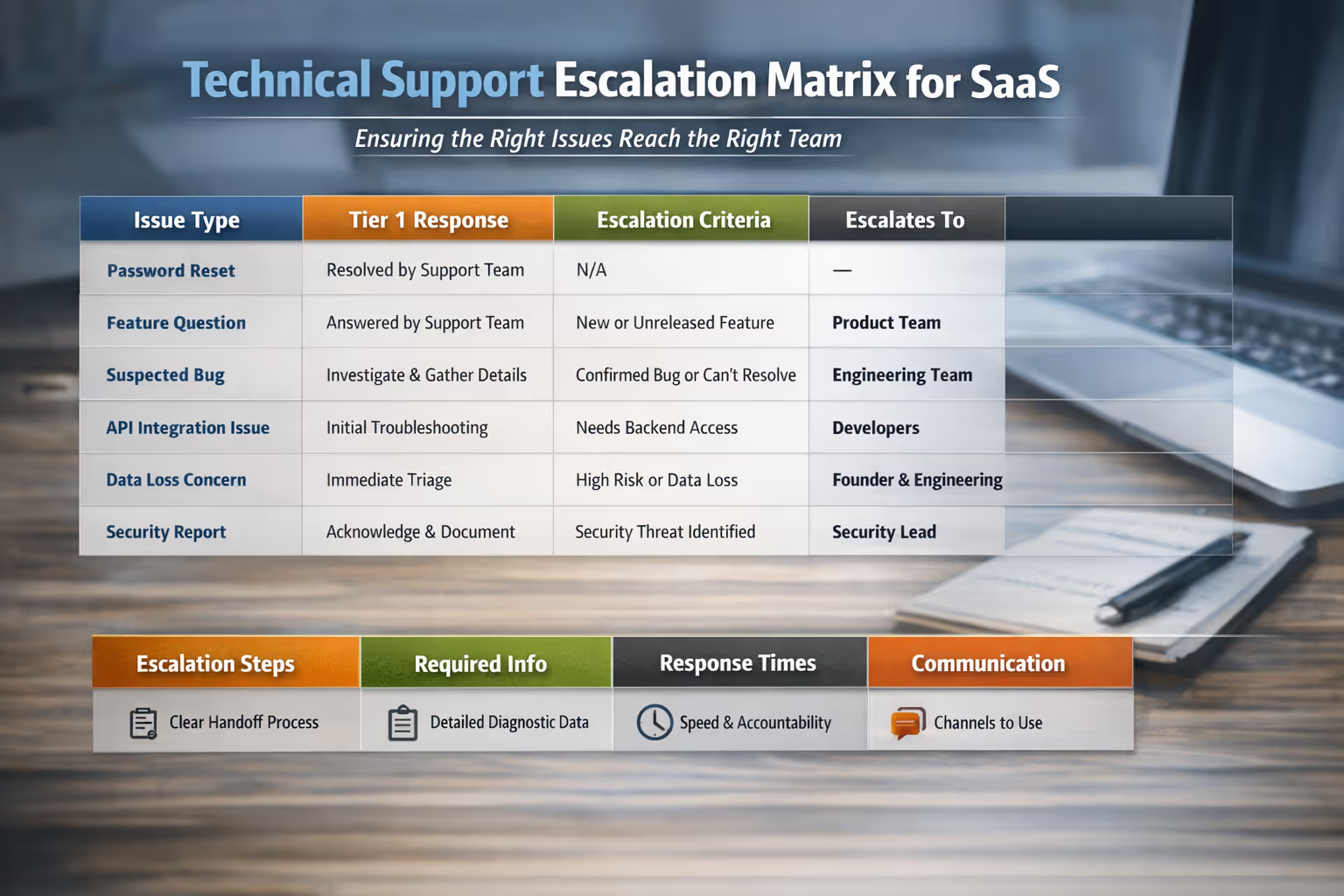
Issue categories and ownership. Map every type of support request to a clear owner:
| Issue Type | First Response | Escalation Trigger | Escalates To |
| Password reset | Support team resolves | N/A | N/A |
| Feature question | Support team resolves | Question involves unreleased feature | Product team via Slack |
| Suspected bug | Support team investigates, gathers info | Bug confirmed or can't resolve in 30 min | Engineering via Jira ticket |
| API integration failure | Support team acknowledges, collects logs | Immediately after initial triage | Engineering with reproduction steps |
| Data loss concern | Support team acknowledges | Immediately | Founder + Engineering |
| Security report | Support team acknowledges | Immediately | Security lead via direct message |
Information requirements for escalation. For each escalation type, specify exactly what information the support team should gather before handing off. Nothing slows down bug fixes like incomplete reports.
A good escalation template for a suspected bug might require:
Steps to reproduce (numbered, specific)
User's browser, OS, and device
Screenshots or screen recordings
Account ID and relevant timestamps
Error messages (exact text)
What troubleshooting was already attempted
Response time expectations. Define how quickly each issue type should be acknowledged, investigated, and escalated. This keeps everyone accountable and ensures urgent issues don't sit in a queue.
Communication channels. Specify exactly where and how to escalate. Slack channel for quick questions? Jira for bugs? Direct text for security emergencies? Remove ambiguity completely.
A Real Escalation Scenario: API Token Expiration
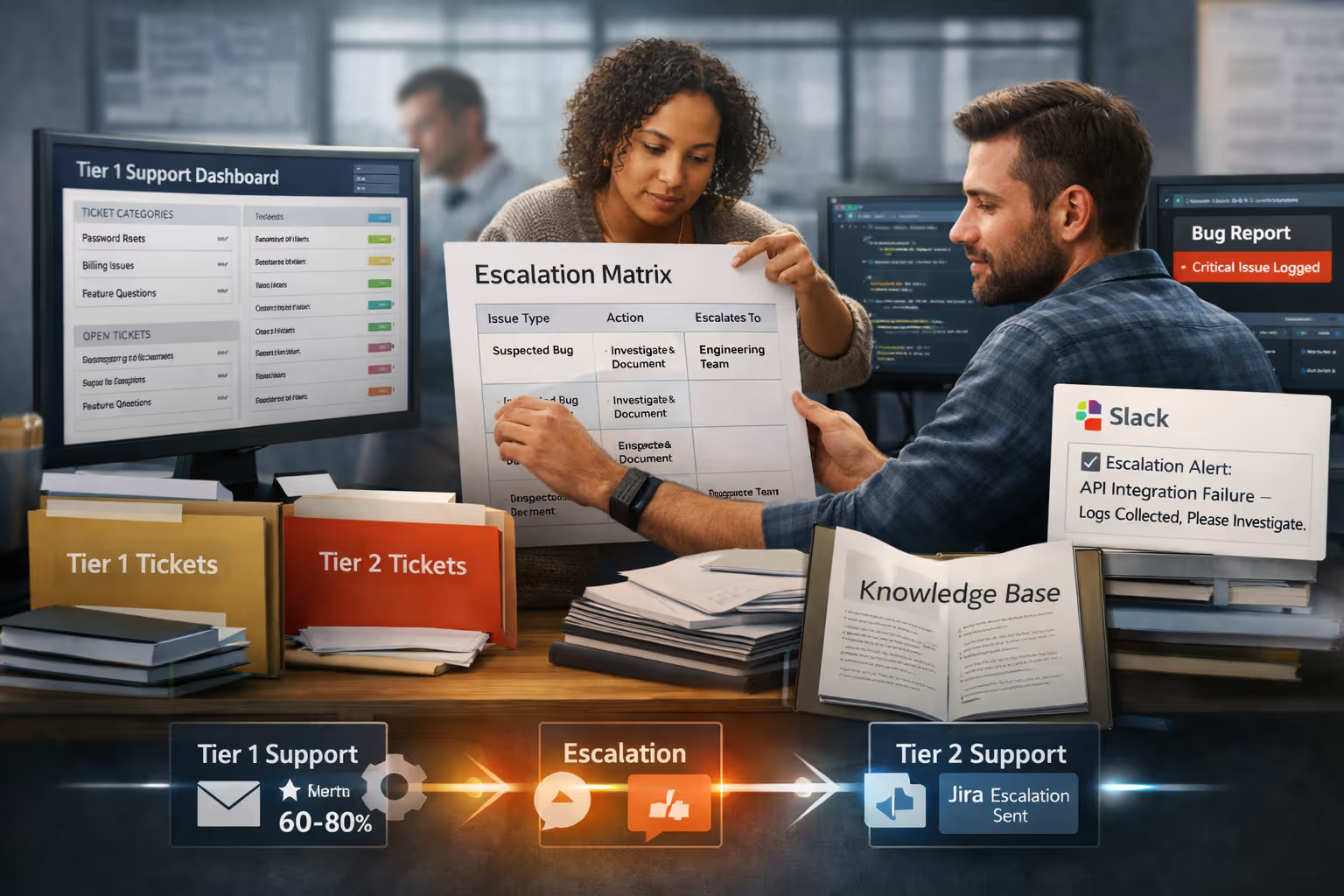
Here's how a well-designed escalation matrix handles a common SaaS support issue—a customer reporting that their integration suddenly stopped working:
Initial ticket: "Our Zapier integration hasn't worked since yesterday. We're missing data."
Tier 1 triage (support team):
Check if this is a known issue (outage, recent deployment)
Verify the customer's API token status in the admin panel
Check if other customers are reporting similar issues
Gather: integration type, when it last worked, error messages, account ID
Escalation trigger: Token shows as valid, no known issues, customer has tried reconnecting
Escalated to: Engineering via Jira with the template filled out
What engineering receives: A complete ticket with reproduction context, not "customer says Zapier is broken."
The support team didn't fix the bug. But they saved engineering 20 minutes of back-and-forth and ensured the customer got a fast acknowledgment instead of silence.
The Escalation Matrix Prevents Two Problems
First, it prevents under-escalation. Without clear guidelines, support agents might spend too long trying to solve problems beyond their scope, frustrating customers and delaying resolution.
Second, it prevents over-escalation. Your engineering team doesn't need to be pinged for every ticket that seems vaguely technical. A good matrix gives your support team confidence to resolve what they can and escalate only what they should.
Why Fractional Support Works Particularly Well for SaaS
Generic outsourcing advice doesn't always apply to software companies. SaaS support has specific characteristics that actually make fractional teams a strong fit—if you structure things correctly.
Your Support Volume Is Probably Spiky
SaaS companies typically see support volume that correlates with release cycles, marketing pushes, or seasonal usage patterns. You might have quiet weeks followed by launches that triple your ticket count overnight.
According to Intercom's research on support operations, this volume unpredictability is one of the primary challenges for growing software companies—teams either scramble during peaks or sit idle during valleys [2]. Hiring full-time to handle peak volume means paying for idle capacity during quiet periods. A fractional team scales with your actual needs—you're paying for coverage, not bench time.
Most SaaS Support Is Written, Not Spoken
Unlike consumer products where customers often expect phone support, SaaS users typically prefer email, chat, or help desk tickets. This plays to the strengths of fractional support teams who specialize in written communication.
Written support also creates documentation automatically. Every ticket becomes a potential knowledge base article or saved reply, building institutional knowledge over time.
Your Product Changes Constantly
SaaS products ship updates weekly or even daily. This means your support team needs to stay current, but it also means documentation can be updated centrally and immediately applied across the team.
A fractional team working from your knowledge base will automatically have access to the latest information—unlike a single in-house hire who might miss an update while on vacation.
The Two-Person Coverage Model
This matters more than most founders realize. A single in-house support hire creates a single point of failure. When they're sick, on vacation, or quit unexpectedly, you're back in the inbox.
Fractional teams typically assign multiple agents to your account, ensuring consistent coverage regardless of individual availability [3]. You get redundancy without the cost of multiple full-time hires.
Maintaining Quality: The Systems That Make It Work
Quality doesn't happen by accident. It comes from intentional systems that align your fractional team with your standards and give you visibility into performance.
Start with a Knowledge Base, Not Training Sessions
The biggest mistake founders make when outsourcing: trying to "train" their support team through calls and verbal explanations.
This doesn't scale. It creates inconsistency. And it means every new team member starts from zero.
Instead, build your knowledge base first. Document:
Your product's core workflows with screenshots
Common issues and their solutions
Your brand voice and tone guidelines
What language and phrasing to use (and avoid)
Escalation procedures with examples
A good fractional support partner will actually help you build this documentation as they learn your product, turning their onboarding into an asset that serves future team members [4].
We learned early on that diving into documentation before answering a single ticket prevents most quality issues. By the time we're responding to real customers, there's a documented process for the 20 most common questions—which typically covers 60%+ of incoming volume.
Use Response Templates Strategically
Saved replies and templates get a bad reputation because they're often used poorly—copy-pasted without customization, making customers feel like they're talking to a robot.
But templates used well are a quality control mechanism. They ensure accurate information, consistent tone, and faster response times.
The key is building templates that handle the opening and core information while leaving room for personalization:
Template structure:
Warm, on-brand greeting (customized)
Acknowledgment of their specific situation (customized)
Accurate technical explanation (templated)
Clear next steps (templated)
Personal sign-off (customized)
The agent adds context specific to the customer's situation while the core technical content stays accurate and consistent.
Implement a Review Period During Onboarding
Quality assurance starts before your fractional team goes live. A structured onboarding process should include a period where the team drafts responses for your review before sending them to customers.
This serves multiple purposes:
You catch any misunderstandings about your product early
The team learns your voice through your feedback
You build trust incrementally rather than hoping for the best
A typical onboarding timeline [5]:
Days 1-2: Review past tickets, build documentation
Days 3-5: Draft sample responses for common scenarios
Days 5-6: Receive your feedback, adjust approach
Day 7+: Go live with continued spot-checks during the first few weeks
Monitor the Right Metrics
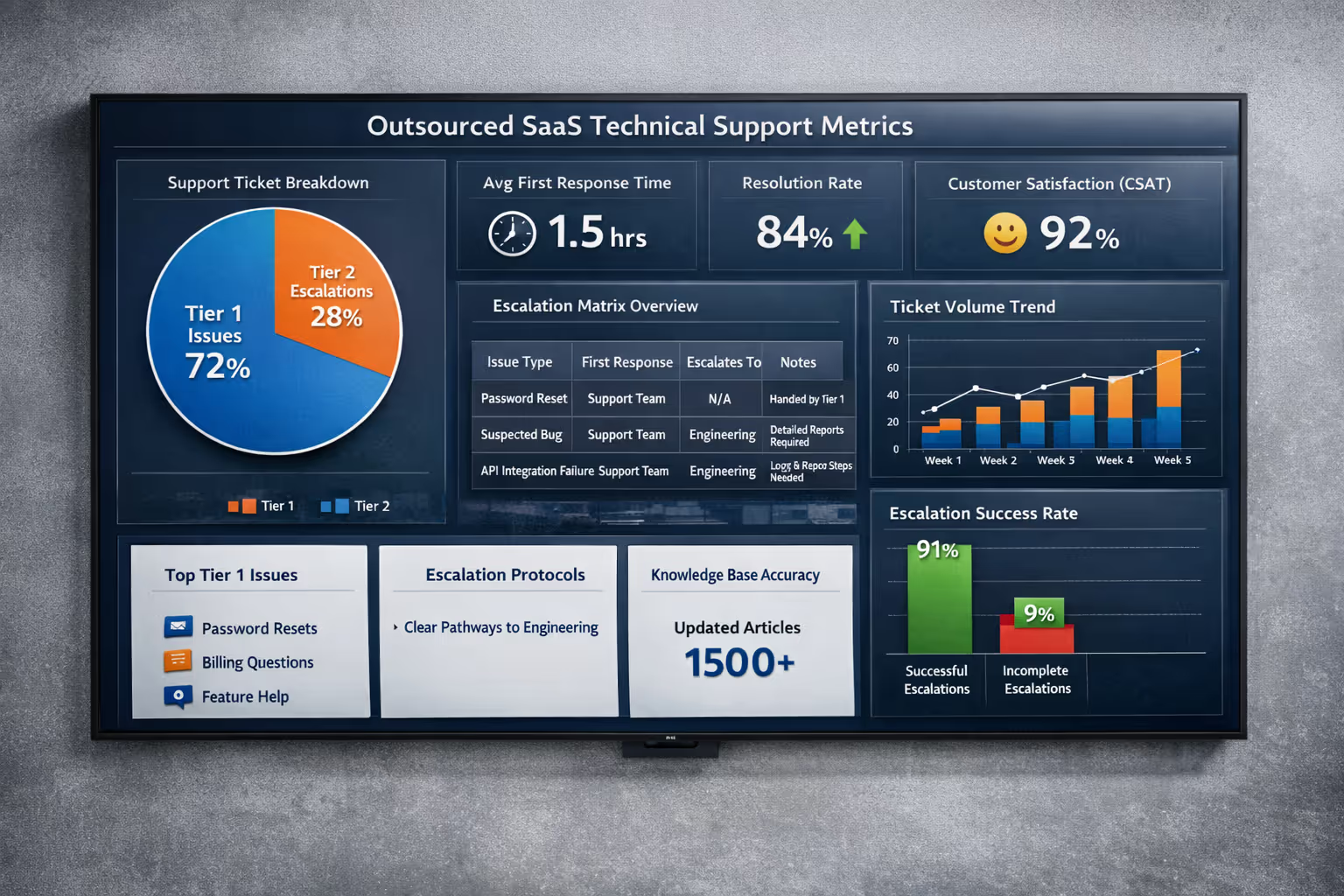
Not all support metrics matter equally for SaaS. Focus on:
First response time. How quickly are customers acknowledged? For email support, same-business-day response is table stakes. Under four hours is good. Under one hour is excellent.
Resolution rate. What percentage of tickets does your support team fully resolve without escalation? For Tier 1 issues, this should be high (80%+). Low resolution rates might indicate training gaps or unclear escalation boundaries.
Escalation quality. When tickets do get escalated, are they well-documented? Does your engineering team have what they need to investigate immediately? Poor escalation quality wastes everyone's time.
Customer satisfaction. Post-ticket surveys give you direct feedback on whether your support quality is meeting expectations. Research from the Support Driven community indicates that CSAT scores tend to remain stable or improve when companies transition to specialized fractional support, primarily because response times improve and agents have dedicated focus [6].
The right metrics depend on your specific situation, but the principle is consistent: measure what actually indicates quality, not just activity.
When to Keep Support In-House (At Least Partially)
Outsourcing isn't always the right answer, and it's rarely the complete answer. Be honest about what should stay with your team.
Keep In-House If...
Your product requires deep technical knowledge to troubleshoot most issues. If the majority of tickets require database access, code inspection, or infrastructure investigation, you need in-house technical support or a very specialized partner.
Support is a core competitive advantage. Some SaaS companies differentiate specifically on white-glove, highly personalized support. If that's your strategy, outsourcing might dilute what makes you special.
You're pre-product-market fit. Early-stage startups often learn crucial product insights from support conversations. Before you have consistent patterns in your tickets, you might want the founder or core team handling support directly.
The Hybrid Model Often Works Best
Many SaaS companies find success with a hybrid approach:
Fractional team handles Tier 1 and initial triage
In-house team handles Tier 2 and complex escalations
Founder or customer success lead handles VIP accounts or strategic relationships
This gives you coverage and scalability for routine support while keeping critical relationships and technical investigation close to home.
Choosing the Right Fractional Support Partner
Not all outsourced support is created equal. The difference between a good and bad experience often comes down to fit.
Look For...
Specialization in your business type. A team that understands SaaS will ramp faster and make fewer mistakes. They'll already know what an API integration issue looks like, why a webhook might fail, or how to explain subscription billing clearly.
Dedicated agents, not rotating staff. You want the same people working on your account consistently. They'll learn your product deeply, recognize repeat customers, and catch patterns that indicate larger issues.
Transparent communication. Your support partner should be easy to reach and proactive about flagging issues. A shared Slack channel or similar real-time communication tool makes collaboration seamless.
Alignment with your values. If you've built your brand on human, personal support, make sure your partner shares that philosophy. Ask about their approach, read their own content, and trust your gut on cultural fit.
Red Flags
Promises that sound too good ("We'll handle everything with zero ramp time!")
Reluctance to explain their process in detail
No clear onboarding or quality assurance approach
Pricing that seems unusually low (you get what you pay for)
High turnover or inability to guarantee consistent agents
The Bottom Line
Outsourcing technical support for your SaaS isn't about finding someone to dump your inbox on. It's about building a system where a fractional team handles the predictable, well-documented work that consumes your time, while complex issues flow smoothly to the people best equipped to solve them.
The components that make this work:
Clear separation of Tier 1 and Tier 2 so everyone knows what gets resolved vs. escalated
A documented escalation matrix that removes ambiguity and ensures urgent issues get urgent attention
A knowledge base that captures your product, processes, and voice in a way any team member can access
Quality systems including onboarding reviews, templates, and ongoing monitoring
The right partner who specializes in your type of business and treats your customers like you would
Done right, fractional technical support doesn't just save you time. It often improves quality by ensuring every ticket gets prompt attention from someone whose primary job is handling support—not squeezing it in between product roadmap meetings and investor calls.
Curious whether this could work for your SaaS? If you're exploring what outsourced support might look like for your specific situation, start with a conversation. Book a call to discuss whether a pilot program makes sense, and what a realistic timeline and scope might look like.
Frequently Asked Questions
How do I ensure an outsourced team understands my technical product?
Start with comprehensive documentation rather than verbal training. Build a knowledge base that covers your core features, common issues, and troubleshooting steps with screenshots. During onboarding, have the team draft responses for your review before going live. This catches misunderstandings early and helps them learn your product through practical application rather than abstract explanation.
What percentage of SaaS support tickets can typically be outsourced?
Most SaaS companies find that 60-80% of their tickets fall into Tier 1 territory—questions and issues that can be resolved with existing documentation and standard troubleshooting. The exact percentage depends on your product's complexity and your customer base's technical sophistication, but the majority of tickets are usually outsourceable with the right systems in place.
How do I prevent quality from dropping when I outsource support?
Quality comes from systems, not hope. Invest in documentation, response templates, and a clear escalation matrix before your fractional team starts. Build in a review period during onboarding where you approve responses before they're sent. Then monitor metrics like resolution rate, escalation quality, and customer satisfaction to catch issues early and course-correct.
Should I outsource if my product is highly technical?
Even highly technical products usually have a significant portion of Tier 1 tickets—billing questions, password resets, basic "how do I" questions—that don't require deep technical knowledge. The key is clearly separating what can be handled with documentation from what requires engineering involvement, then outsourcing the former while keeping robust escalation paths for the latter.
How long does it take for an outsourced team to get up to speed on a SaaS product?
With a well-structured onboarding process and good documentation, a fractional team can typically start handling live tickets within one to two weeks. Full proficiency—including pattern recognition and handling edge cases confidently—usually develops over the first month or two of live support work.
About Evergreen Support
Evergreen Support provides US-based, human-powered customer support for SaaS and ecommerce businesses. Founded by Emma Fletcher and Ellis Annichine after experiencing the challenges of small-business support firsthand, the team specializes in helping founders reclaim their time without sacrificing the personal touch their customers expect. Every client works with dedicated support specialists who learn their product deeply and treat their customers like their own.
Works Cited
[1] Zendesk — "Customer Service Benchmark Report." https://www.zendesk.com/blog/customer-service-benchmark-report/
[2] Intercom — "The State of Customer Support Operations." https://www.intercom.com/resources/books/customer-support-operations
[3] Evergreen Support — "Pricing." https://www.evergreensupport.co/pricing
[4] Evergreen Support — "Fractional Customer Support Teams: A Startup's Complete Guide." https://www.evergreensupport.co/blog/fractional-customer-support-teams-startups-guide
[5] Evergreen Support — "How It Works." https://www.evergreensupport.co/pricing
[6] Support Driven — "Community Research: Outsourcing and Quality Metrics."
https://supportdriven.com/research/'


