
A customer bought your product, decided it wasn't quite right, and now they want to return it. What happens next determines whether they ever buy from you again.
Returns and exchanges email support represents one of the highest-stakes workflows in DTC operations. Handle it poorly, and you'll watch refund requests spiral into chargebacks, negative reviews, and permanent customer loss. Handle it well, and you transform a disappointed buyer into a repeat customer who trusts your brand even more than before.
The problem? Most DTC brands treat returns as an afterthought. They have a policy buried somewhere on their website, maybe a form customers can fill out, and then... chaos. Support tickets pile up. Customers send three follow-up emails asking where their refund is. Your team wastes hours answering the same questions over and over.
This guide walks through a complete returns and exchanges email support workflow designed specifically for DTC brands. You'll get the exact SOP structure, messaging templates, and escalation triggers that reduce repeat tickets while keeping customers satisfied throughout the process.
Table of Contents
Why Returns Email Support Needs Its Own Workflow
The Six Stages of Returns and Exchanges Email Support
Stage One: Initial Request Acknowledgment
Stage Two: Eligibility Verification
Stage Three: RMA Number Assignment and Label Delivery
Stage Four: Return Shipment Tracking
Stage Five: Inspection and Processing
Stage Six: Refund or Exchange Confirmation
Building Your Messaging Cadence to Prevent Repeat Tickets
Exchange vs. Refund Logic: Decision Trees for Your Team
Store Credit as a Strategic Option
Frequently Asked Questions
Why Returns Email Support Needs Its Own Workflow
Returns touch every part of your business. They involve your warehouse, your payment processor, your shipping partners, and your customer relationships. When any piece breaks down, the support inbox absorbs the fallout.
According to the National Retail Federation, return rates for online purchases hover between 20-30%, significantly higher than brick-and-mortar retail [1]. For DTC brands, that means a substantial portion of customer interactions happen after the initial purchase—during the returns process.
Here's what typically goes wrong without a structured workflow:
Customers don't know what's happening. They send a return request and hear nothing for days. Then they email again. And again. Each message creates more work for your team while the customer grows increasingly frustrated.
Support agents make inconsistent decisions. One agent approves a return outside the policy window. Another denies it. Customers notice the inconsistency, and suddenly you're fielding complaints about unfair treatment.
Refunds get delayed without explanation. Your warehouse processes returns, but nobody tells the customer. They assume you're ignoring them or trying to keep their money.
Exchange requests fall through the cracks. A customer wants a different size, not a refund. But somewhere between the request and fulfillment, the exchange gets lost in your system.
A dedicated returns and exchanges email support workflow solves these problems by creating predictable touchpoints, clear decision criteria, and proactive communication that keeps customers informed at every stage.
The Six Stages of Returns and Exchanges Email Support
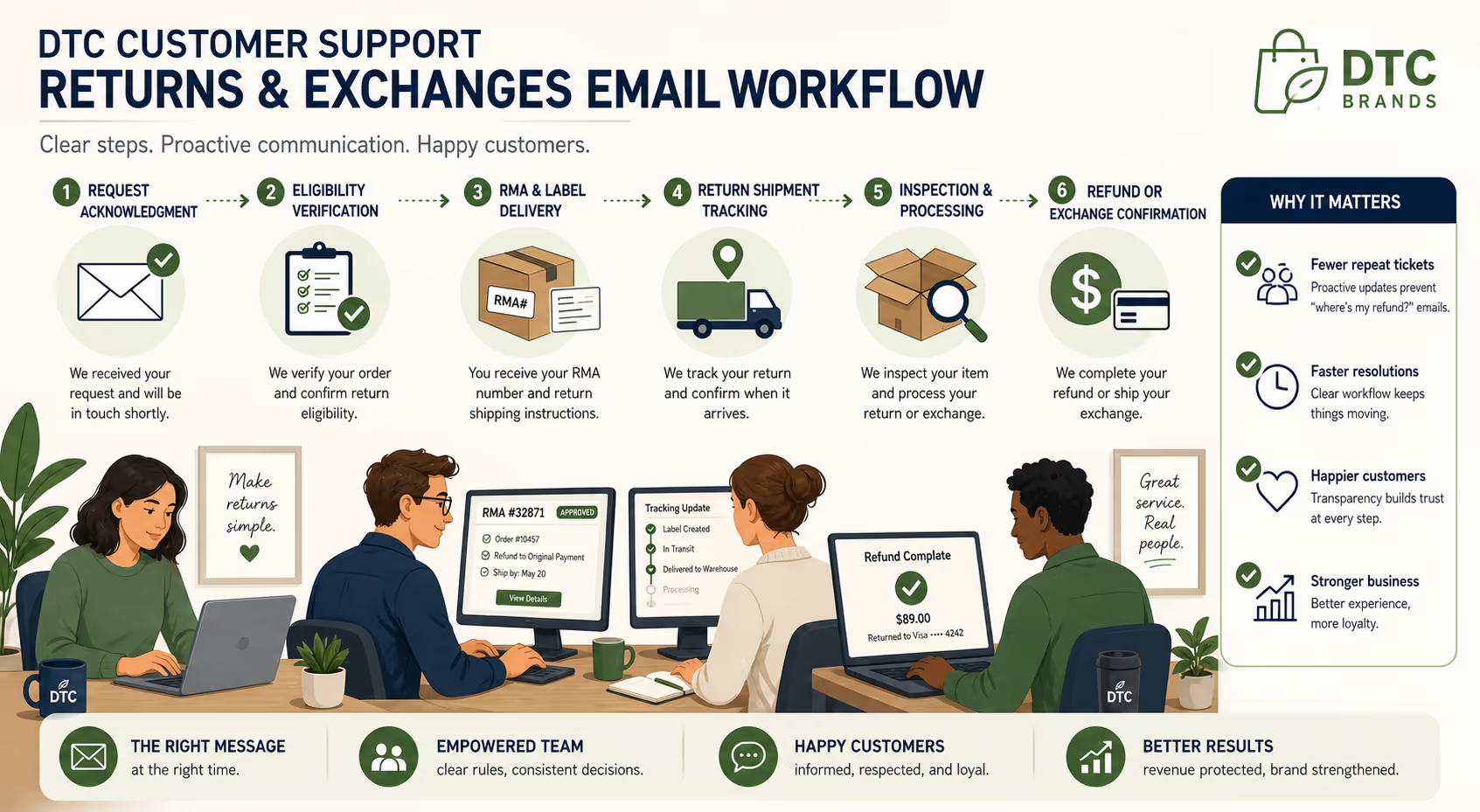
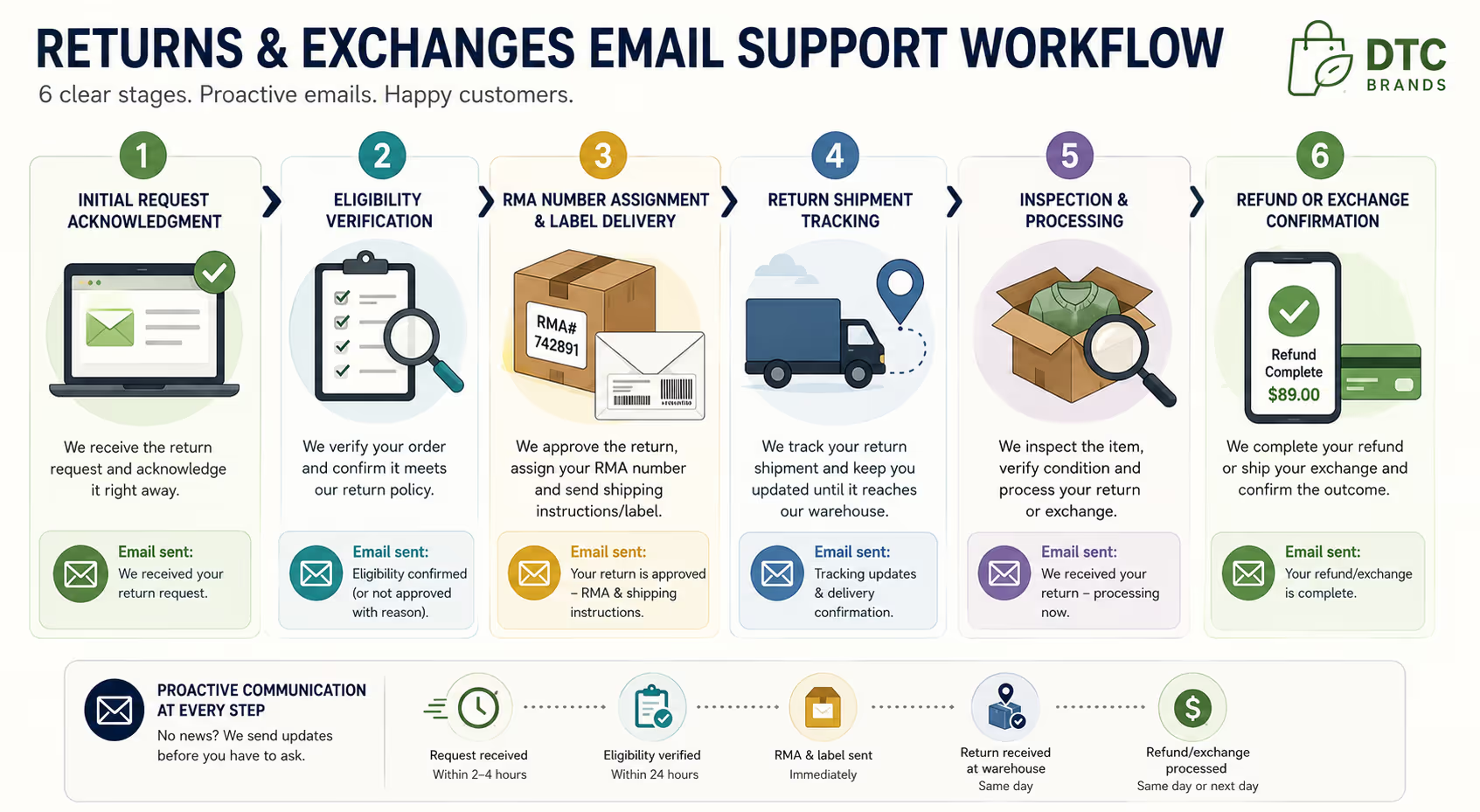
Every return or exchange request moves through the same basic lifecycle, regardless of your specific policies or products. Understanding these stages helps you build a workflow that catches issues before they become escalations.
Stage One: Initial Request AcknowledgmentThe customer reaches out wanting to return or exchange something. Your first response sets the tone for the entire interaction.
Stage Two: Eligibility VerificationYou confirm whether the request meets your return policy criteria—timeframe, condition, product category, and any exclusions.
Stage Three: RMA Number Assignment and Label DeliveryYou generate the return merchandise authorization, provide shipping instructions, and send any prepaid labels.
Stage Four: Return Shipment TrackingThe package is in transit back to your warehouse. This is where customers often get anxious and start sending follow-up emails.
Stage Five: Inspection and ProcessingYour warehouse receives the return, verifies the condition, and updates your system.
Stage Six: Refund or Exchange ConfirmationThe customer gets their money back or their replacement ships. The loop closes with a confirmation message.
Each stage requires specific messaging, clear handoffs, and proactive communication. Let's break them down.
Stage One: Initial Request Acknowledgment
The moment a customer sends a return request, your clock starts ticking. Research from HubSpot indicates that 90% of customers rate an immediate response as important when they have a customer service question [2]. For returns, "immediate" means within a few hours at most.
Your acknowledgment email accomplishes three things:
1. Confirms receipt of the requestThe customer needs to know you received their message and that it didn't disappear into a void.
2. Sets expectations for next stepsTell them exactly what happens next and when they'll hear from you again.
3. Gathers any missing informationIf they didn't include their order number or explain the reason for return, ask now rather than creating another back-and-forth later.
Sample Acknowledgment Template
Subject: We received your return request for Order #[ORDER_NUMBER]Hi [CUSTOMER_NAME],Thank you for reaching out about returning your [PRODUCT_NAME]. We received your request and want to make this as smooth as possible for you.Here's what happens next:Within the next [TIMEFRAME], we'll verify your order details and confirm eligibilityOnce confirmed, you'll receive your RMA number and return shipping instructionsAfter we receive your return, processing typically takes [X] business daysQuick question to help us move forward: [ASK FOR ANY MISSING INFORMATION]We'll be in touch soon with your return authorization.[SIGNATURE]
Notice the structure: acknowledgment, timeline, next steps, and any clarifying questions bundled into a single message. This approach prevents the "I need to ask you three more things" email chains that clog up support queues.
Stage Two: Eligibility Verification
Before issuing an RMA number, your team needs to verify the request meets your return policy criteria. This stage is where many support teams stumble because eligibility decisions require judgment calls.
Core Eligibility Criteria to Check
Purchase date verificationMost DTC brands offer 30-day return windows, though some extend to 60 or 90 days. Your system should automatically flag orders that fall outside the window.
Product condition requirementsUnworn, unwashed, tags attached—whatever your policy specifies. For exchanges due to defects, condition requirements typically differ from buyer's remorse returns.
Product category exclusionsFinal sale items, personalized products, intimate apparel, consumables—document which categories have modified or no return eligibility.
Proof of purchaseOrder number, email confirmation, or credit card statement. Determine what you'll accept and when to make exceptions.
Handling Edge Cases
Clear eligibility criteria cover most requests, but edge cases require documented escalation paths:
Slightly outside the return window? Define your grace period. Most brands allow 3-7 days of flexibility before requiring manager approval.
Worn but defective? Separate your defect policy from your general return policy. Defects often warrant exceptions on condition requirements.
Lost receipt but legitimate customer? Decide whether you'll look up orders by email address or credit card.
Gift returns without receipt? Document your store credit policy for gifts.
Create a decision tree your team can follow so eligibility verification happens consistently regardless of which agent handles the request.
Stage Three: RMA Number Assignment and Label Delivery
The RMA (Return Merchandise Authorization) number serves as the tracking ID for the entire return journey. It connects the customer's request, the shipping label, the warehouse processing, and the eventual refund or exchange.
Why RMA Numbers Matter
Without an RMA system, your warehouse receives packages with no context. They don't know which order it belongs to, whether it's a refund or exchange, or what condition the customer claimed. This leads to processing delays, lost items, and frustrated customers wondering where their refund went.
The RMA number should include or link to:
Original order number
Customer contact information
Return reason
Refund vs. exchange preference
If exchange: requested size, color, or variant
Date of approval
Condition reported by customer
Label Delivery Options
Prepaid return labelsYou cover shipping costs. Customers appreciate the convenience, and you control the carrier and tracking. The downside: cost adds up quickly.
Customer-paid shippingThe customer arranges their own return shipment. Lower cost for you, but you lose visibility into when the package arrives.
QR code or email-later labelsSome carriers let customers scan a QR code at drop-off rather than printing a label at home. This removes a friction point for customers without printers.
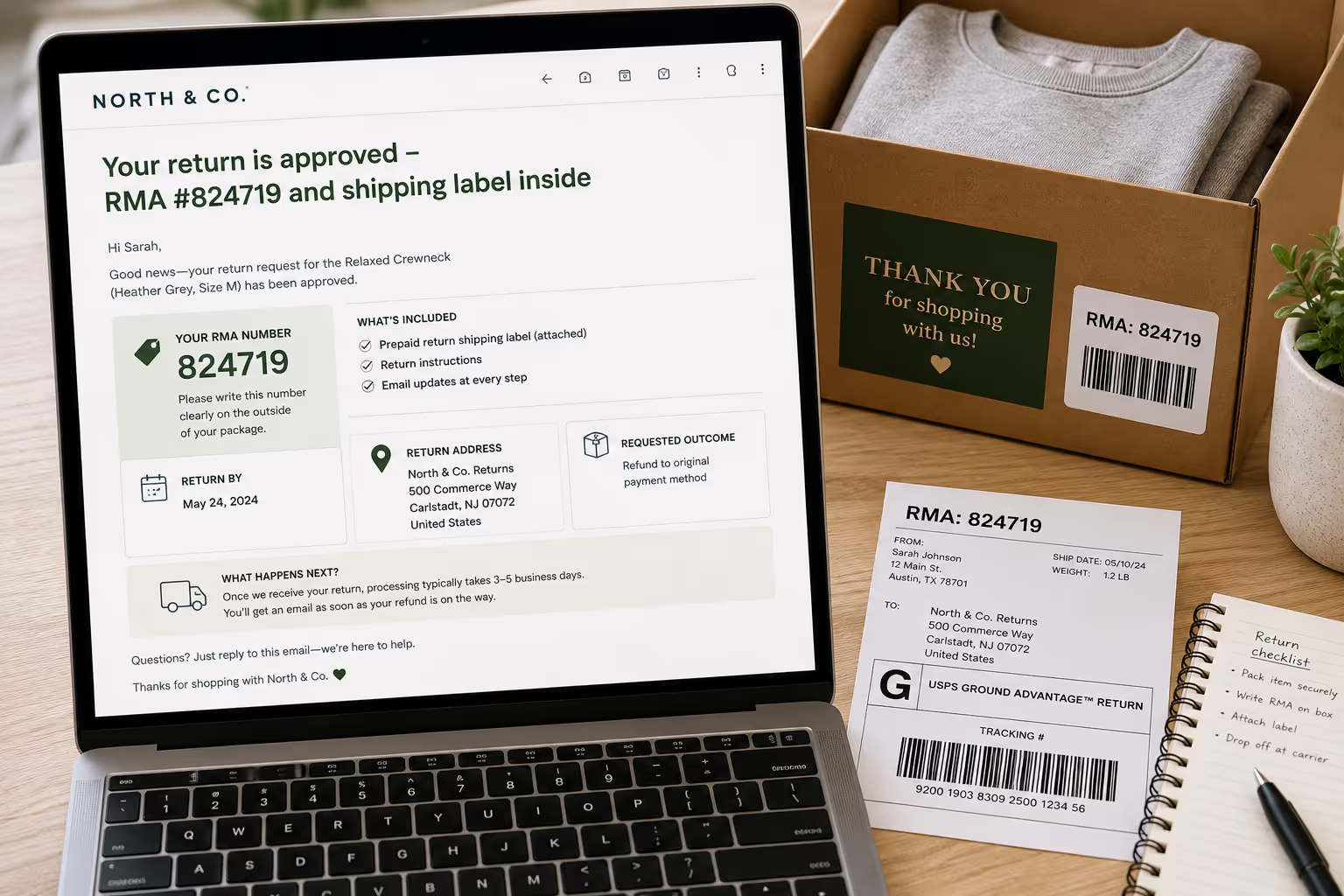
RMA Delivery Email Template
Subject: Your return is approved – RMA #[RMA_NUMBER] and shipping instructionsHi [CUSTOMER_NAME],Good news: your return request for [PRODUCT_NAME] has been approved.Your RMA Number: [RMA_NUMBER]Please write this number clearly on the outside of your package.Shipping Instructions:[PREPAID LABEL OPTION: Your prepaid shipping label is attached. Simply print it, affix it to your package, and drop off at any [CARRIER] location.][CUSTOMER-PAID OPTION: Ship your return to the address below using any carrier with tracking. Please save your tracking number.]Return Address:[WAREHOUSE ADDRESS]Please ship by: [DATE – typically 7-14 days from approval]What you're returning: [PRODUCT_NAME, SIZE, COLOR]Outcome: [REFUND TO ORIGINAL PAYMENT METHOD / EXCHANGE FOR SIZE X / STORE CREDIT]Once we receive your package, processing typically takes [X] business days. We'll email you as soon as your [refund/exchange/credit] is complete.Questions? Just reply to this email.[SIGNATURE]
Include all relevant information in a single message. The customer should be able to complete their return using only this email, without needing to dig through previous correspondence or visit your website.
Stage Four: Return Shipment Tracking
This is the anxiety stage. The customer has dropped off their package, their money is still gone, and they're waiting. Many support tickets during the returns process come from this window.
Proactive Communication Prevents Repeat Tickets
Rather than waiting for customers to ask "Where's my refund?", implement proactive touchpoints:
Carrier pickup confirmation (if your system captures this)A brief automated message confirming the return label was scanned.
In-transit update (optional but helpful)Particularly useful for higher-value items or longer shipping distances.
Delivery confirmationThis is the critical one. The moment your warehouse receives the package, send a message confirming receipt and setting expectations for processing time.
Delivery Confirmation Template
Subject: We received your return – processing nowHi [CUSTOMER_NAME],Great news! Your return for RMA #[RMA_NUMBER] arrived at our warehouse today.We're inspecting your item now, and you'll receive your [refund/exchange/store credit] within [X] business days.No action needed on your end—we'll email you the moment everything is complete.[SIGNATURE]
This single message eliminates 80% of "where's my refund?" follow-ups. The customer knows you have their item and when to expect resolution. They don't need to check in.
Stage Five: Inspection and Processing
Your warehouse team examines the returned item, verifies it matches the RMA details, and updates your system. This stage happens internally, but it creates customer-facing implications.
Standard Inspection Criteria
Define what your warehouse should check:
Item matches the RMA description (correct product, size, color)
Condition matches customer's stated condition
No unauthorized items included (customers sometimes return the wrong thing)
Original packaging, tags, or accessories present (per your policy)
When Inspections Reveal Issues
Sometimes what the customer described doesn't match what arrived. Maybe they said "unworn" but the shoes have scuff marks. Maybe they returned the wrong item entirely.
Build response templates for common scenarios:
Condition doesn't match stated conditionOffer a partial refund, store credit instead of refund, or return the item to the customer. Document which outcomes are available at the agent level versus requiring manager approval.
Wrong item returnedContact the customer to arrange return of their item and receipt of the correct item. This requires patience and clear communication to avoid frustration.
Item missing componentsTags removed, accessories missing, or packaging damaged beyond policy requirements. Again, document your options and decision authority.
Processing Stage Email (When Issues Arise)
Subject: Quick question about your return (RMA #[RMA_NUMBER])Hi [CUSTOMER_NAME],We received your return and noticed [SPECIFIC ISSUE – be factual, not accusatory].Here's how we can resolve this:[OPTION 1][OPTION 2]Just reply to let us know which option works best for you.[SIGNATURE]
Keep the tone neutral. Assume good faith. Customers sometimes make honest mistakes about condition or accidentally ship the wrong item. Your goal is resolution, not interrogation.
Stage Six: Refund or Exchange Confirmation
The final stage closes the loop. The customer gets what they were waiting for, and you confirm it clearly.
Refund Confirmation Template
Subject: Your refund is complete – $[AMOUNT] returned to your [PAYMENT METHOD]Hi [CUSTOMER_NAME],Your return for [PRODUCT_NAME] is fully processed. Here are the details:Refund amount: $[AMOUNT]Returned to: [PAYMENT METHOD – last 4 digits if card]Processing time: Depending on your bank, the credit should appear within 5-10 business daysThank you for giving us the opportunity to make this right. We hope to see you again soon.[SIGNATURE]
Exchange Shipment Confirmation
Subject: Your exchange is on the way!Hi [CUSTOMER_NAME],Great news – your exchange has shipped!What's coming: [PRODUCT NAME, SIZE, COLOR]Tracking number: [TRACKING NUMBER]Estimated delivery: [DATE RANGE]We hope this one is exactly what you were looking for. If you have any questions, just reply to this email.[SIGNATURE]
Store Credit Confirmation
Subject: Your store credit is ready – $[AMOUNT] available nowHi [CUSTOMER_NAME],Your return is complete, and your store credit is ready to use.Credit amount: $[AMOUNT]How to use: The credit is automatically applied to your account ([EMAIL ADDRESS]) and will appear at checkout on your next order.Expiration: [DATE or "This credit never expires"]Thank you for your patience throughout this process.[SIGNATURE]
Building Your Messaging Cadence to Prevent Repeat Tickets
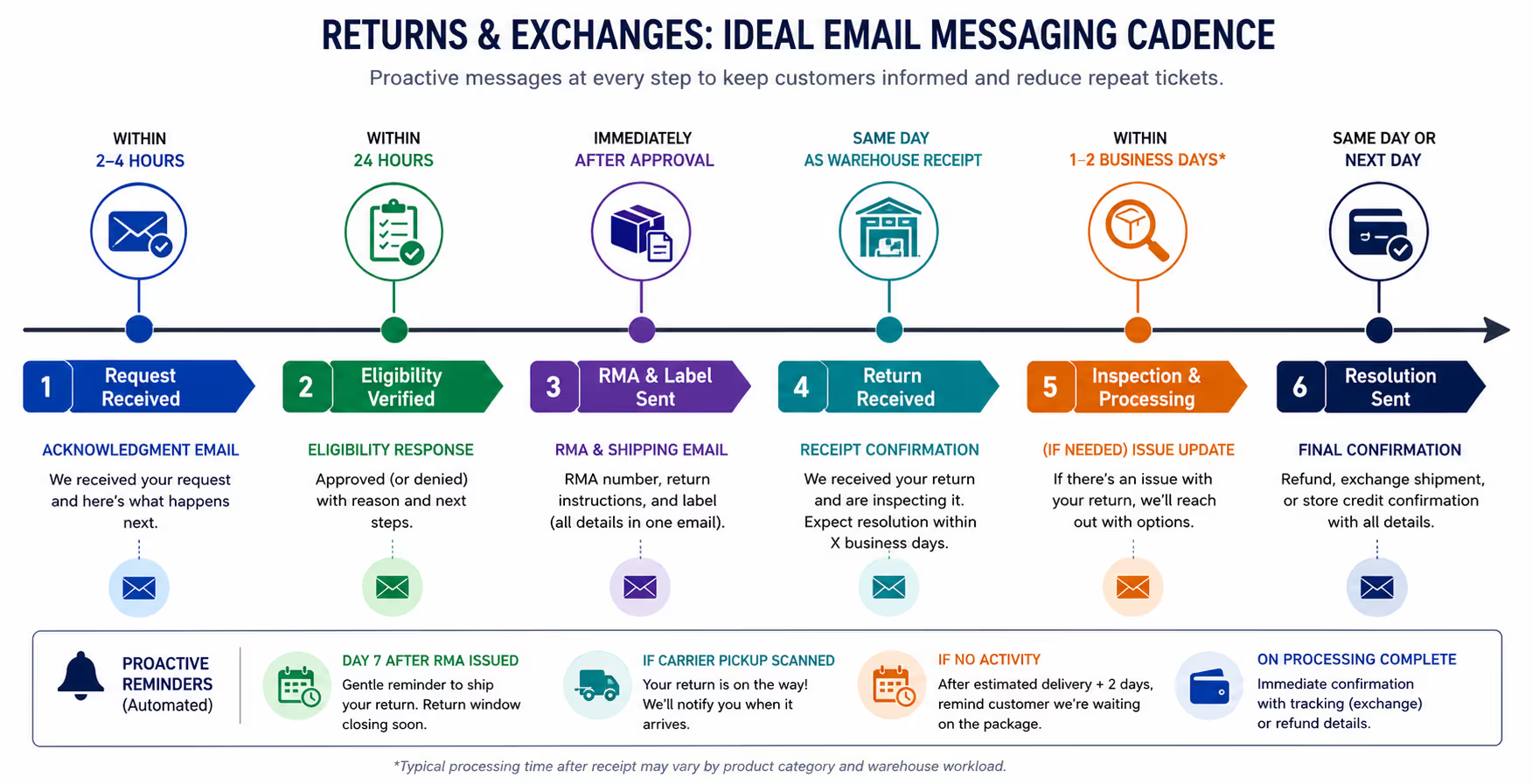
The templates above form individual touchpoints, but the real power comes from the cadence—the timing and sequence of your communications.
Ideal Returns Communication Timeline
| Stage | Timing | Communication |
| Request received | Within 2-4 hours | Acknowledgment email |
| Eligibility verified | Within 24 hours | Approval or denial with reason |
| RMA and label sent | Immediately after approval | Complete instructions in one email |
| Return received | Same day as warehouse receipt | Processing confirmation |
| Refund/exchange processed | Same day or next day | Final confirmation with details |
The "No News" Problem
When customers don't hear from you, they assume the worst. The most effective way to reduce "where's my refund?" tickets is to communicate before they need to ask.
Build automated triggers for:
RMA unused after 7 days: Gentle reminder that return window is closing
Package delivered to warehouse: Immediate acknowledgment
Refund processed in your system: Immediate confirmation
If your ecommerce platform or helpdesk doesn't support these automations, assign an agent to manually check these triggers daily. The time investment pays off in reduced repeat tickets.
Measuring Your Cadence Effectiveness
Track these metrics to identify bottlenecks:
Time from request to acknowledgment: Target under 4 hours
Time from acknowledgment to RMA delivery: Target under 24 hours
Time from warehouse receipt to refund: Target under 48 hours
Repeat contacts per return: Target under 1.5
If customers contact you more than once per return on average, your proactive communication is failing somewhere.
Exchange vs. Refund Logic: Decision Trees for Your Team
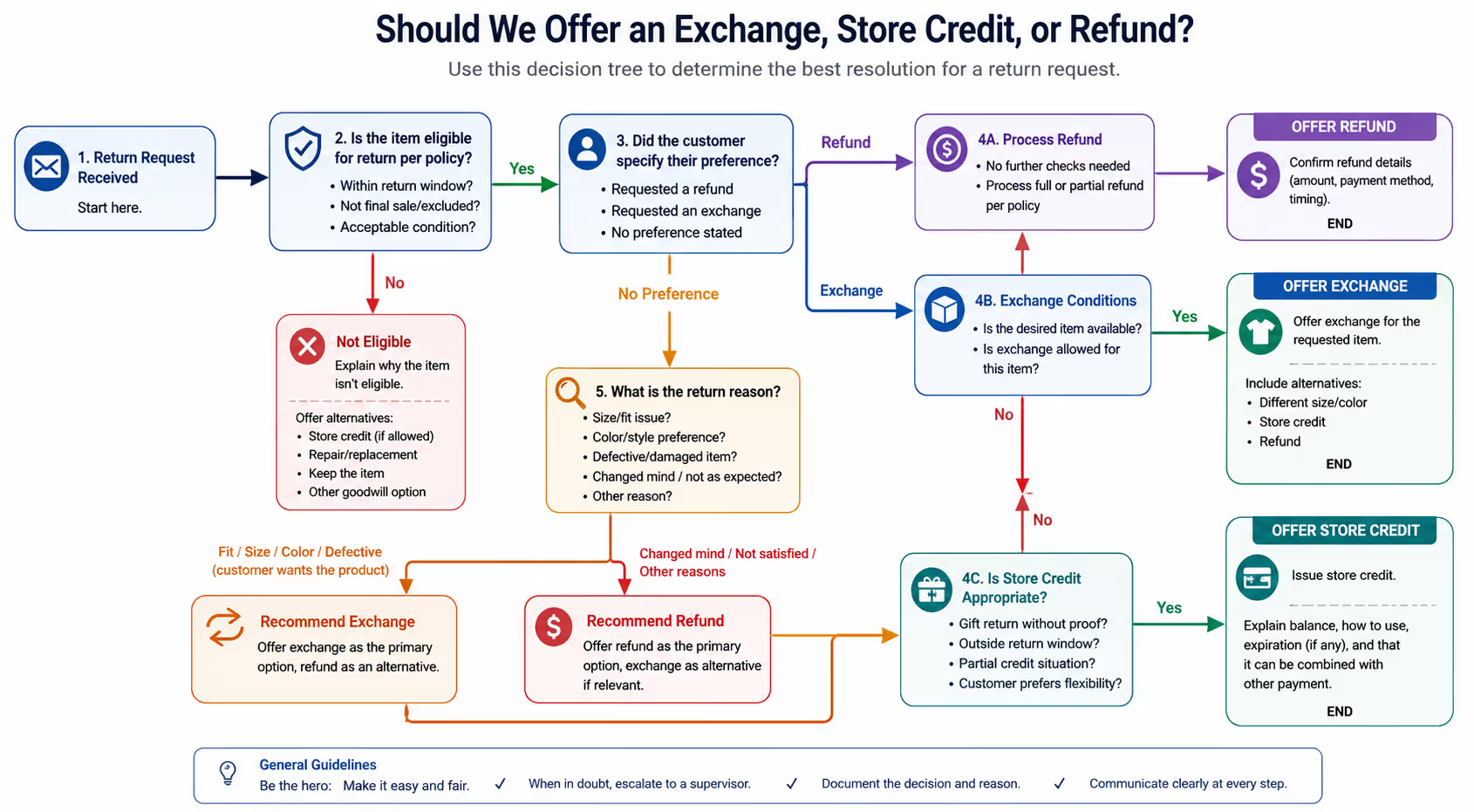
Not every return request should result in a refund. Exchanges and store credit preserve revenue while still satisfying customers. But offering the right option requires clear decision logic.
When to Suggest an Exchange
Customer states a fit issue"Too small" or "too big" clearly indicates they want the product, just in a different size.
Customer expresses disappointment but not rejection"The color looked different online" might mean they'd prefer a different color, not that they hate the product.
Defective item with available replacementIf the product arrived damaged or defective, an exchange is often faster than a refund and repurchase.
When to Default to Refund
Customer explicitly requests refundDon't push exchanges when they've clearly stated they want their money back.
Product is final sale or unavailableIf you can't offer an exchange, don't suggest one.
Negative overall experienceIf the customer had shipping delays, received the wrong item, or experienced other issues, a refund with a discount code for future purchase may be more appropriate.
Sample Decision Tree
Customer requests return ↓Is item eligible per policy? → No → Explain why, offer alternatives if any → Yes ↓Did customer specify refund vs exchange? → Yes, refund → Process refund → Yes, exchange → Verify availability, process exchange → No preference stated ↓Is return reason size/fit/color? → Yes → Offer exchange as primary option, refund as alternative → No → Offer refund as primary, mention exchange if relevant
Train your team on this logic so exchanges aren't overlooked. Many customers appreciate the suggestion—they wanted the product, just not that exact variant.
Store Credit as a Strategic Option
Store credit occupies a middle ground between exchanges and refunds. The customer gets value back, and you retain the revenue (at least temporarily).
When Store Credit Makes Sense
Gift returns without proof of purchaseStandard practice for many retailers. The gift recipient gets value without the original purchaser seeing a refund.
Returns outside the standard windowWhen you approve a late return as a goodwill gesture, store credit offers a compromise.
Partial credit situationsIf an item can't receive a full refund due to condition, store credit at a partial value may satisfy the customer.
Customer prefers shopping flexibilitySome customers prefer credit they can use on any future item rather than exchanging for a specific item now.
Store Credit Best Practices
Make it easy to use. Credit should apply automatically at checkout when the customer logs in.
Communicate the balance. Include the credit amount in confirmation and make it visible in their account.
Choose expiration carefully. No expiration builds goodwill. Short expirations feel punitive. If you must expire credit, make it at least 12 months.
Allow credit + payment combinations. Customers should be able to use partial credit and pay the remainder on an order that exceeds their balance.
Making This Workflow Work at Scale
Building this workflow is one thing. Running it consistently across hundreds or thousands of returns per month is another.
The brands that execute returns well share a few characteristics:
- They document everything. Every template, decision tree, and escalation path exists in writing where the team can reference it.
- They measure and iterate. They track repeat contact rates, processing times, and customer satisfaction with returns. When numbers slip, they investigate.
- They invest in the right support. Returns require attention to detail, empathy, and clear communication. That takes time—time many founders and small teams don't have.
They document everything. Every template, decision tree, and escalation path exists in writing where the team can reference it.
They measure and iterate. They track repeat contact rates, processing times, and customer satisfaction with returns. When numbers slip, they investigate.
They invest in the right support. Returns require attention to detail, empathy, and clear communication. That takes time—time many founders and small teams don't have.
If your team is stretched thin answering the same return questions over and over, or if your returns workflow feels more like chaos than a system, it might be time to bring in help.
Evergreen Support helps DTC brands build and run returns workflows like the one described here—from SOP creation to template development to actually managing the inbox. Book a call to discuss how we can take returns off your plate while keeping your customers happy.
Frequently Asked Questions
How quickly should we respond to return requests?
Aim to acknowledge return requests within 2-4 hours during business hours. First response time significantly impacts customer perception of the entire returns experience. If you can't provide a complete answer immediately, send an acknowledgment with a timeline for follow-up.
Should we require customers to explain why they're returning an item?
Asking for a reason helps improve your products and processes, but making it required can create friction. The best approach: ask the question, but don't make it mandatory. Many customers will share feedback voluntarily, giving you useful data without slowing down the process.
How do we handle return requests that fall outside our policy window?
Document a clear grace period (typically 3-7 days) where agents can approve without escalation. Beyond that, create an escalation path to a manager or lead who can make judgment calls based on customer history, order value, and reason for delay. Consistency matters—whatever you decide, apply it fairly.
What's the best way to handle customers who abuse return policies?
Track return rates by customer. Most customers return items occasionally for legitimate reasons. Customers who consistently return large percentages of orders may need a conversation. Some brands implement "final sale only" restrictions for serial returners. Handle these situations privately and professionally.
Should we offer free return shipping?
Free returns reduce friction and improve customer satisfaction. However, they also cost money and can encourage casual purchasing. Consider your margins, average order value, and competitive landscape. Many brands offer free returns over a certain order threshold or for exchanges but not refunds.
E-E-A-T Section
This guide was developed based on direct experience supporting ecommerce and DTC brands with their customer support operations. Evergreen Support is a US-based customer support agency that specializes in email support for small online businesses. Our team handles returns and exchanges daily for SaaS and ecommerce clients, giving us practical insight into what works at scale and what creates unnecessary friction. The workflow, templates, and decision trees presented here reflect real operational practices, not theoretical frameworks.
Works Cited
[1] National Retail Federation — "Consumer Returns in the Retail Industry." https://nrf.com/research/consumer-returns-retail-industry
[2] HubSpot — "The Hard Truth About Acquisition Costs (and How Your Customers Can Save You)." https://blog.hubspot.com/service/customer-acquisition-study


