
When you're running a SaaS company, churn isn't just a metric. It's the silent killer of growth.
Every customer who cancels represents lost revenue, wasted acquisition costs, and a warning sign that something in your operation isn't working. For small SaaS teams, the culprit often hides in plain sight: slow, inconsistent customer support that pushes frustrated users toward the cancel button.
This case study explores how one SaaS startup transformed their retention numbers by partnering with an outsourced customer support team. The result? A measurable 20% reduction in monthly churn within six months of implementation.
The Churn Problem Most SaaS Founders Underestimate
Here's a number that should make every SaaS founder pause: a 5% improvement in customer retention can increase profits by 25% to 95%, according to research published by Harvard Business School [1]. Yet many early-stage companies treat support as an afterthought while pouring resources into acquisition.
The math is brutal. If you're churning 8% of customers monthly, you need to replace nearly your entire customer base every year just to stay flat. Meanwhile, acquiring a new customer costs five to seven times more than retaining an existing one [2].
For small SaaS teams, the retention challenge becomes personal. The founder answering support tickets at midnight isn't providing great service. They're providing exhausted, distracted service while their core product responsibilities suffer.
Inside the Startup: A Common Scenario
The startup in this case study fits a familiar profile. A bootstrapped B2B SaaS tool with roughly 400 paying customers. Three full-time employees. Monthly recurring revenue hovering around $35,000.
The founder had been handling customer support personally since launch. What started as 30 minutes daily had ballooned into three to four hours of inbox management. Response times stretched from hours to days. Feature development stalled. And every month, the churn report delivered the same frustrating news.
Their monthly churn rate sat at 7.2%. Not catastrophic by industry standards, but enough to create a constant treadmill of replacement. The SaaS industry average hovers between 5% and 7% for B2B companies [3], so they weren't outliers. But "average" wasn't going to build the business they wanted.
Exit surveys revealed a pattern. Customers weren't leaving because the product failed them. They were leaving because they felt ignored when problems arose.
The Support Gap That Drives Customers Away
Customer expectations around response time have shifted dramatically. Research from HubSpot found that 90% of customers rate an immediate response as important or very important when they have a support question [4]. In SaaS specifically, where customers pay monthly and can cancel easily, slow support creates a direct path to churn.
The startup's support reality looked like this:
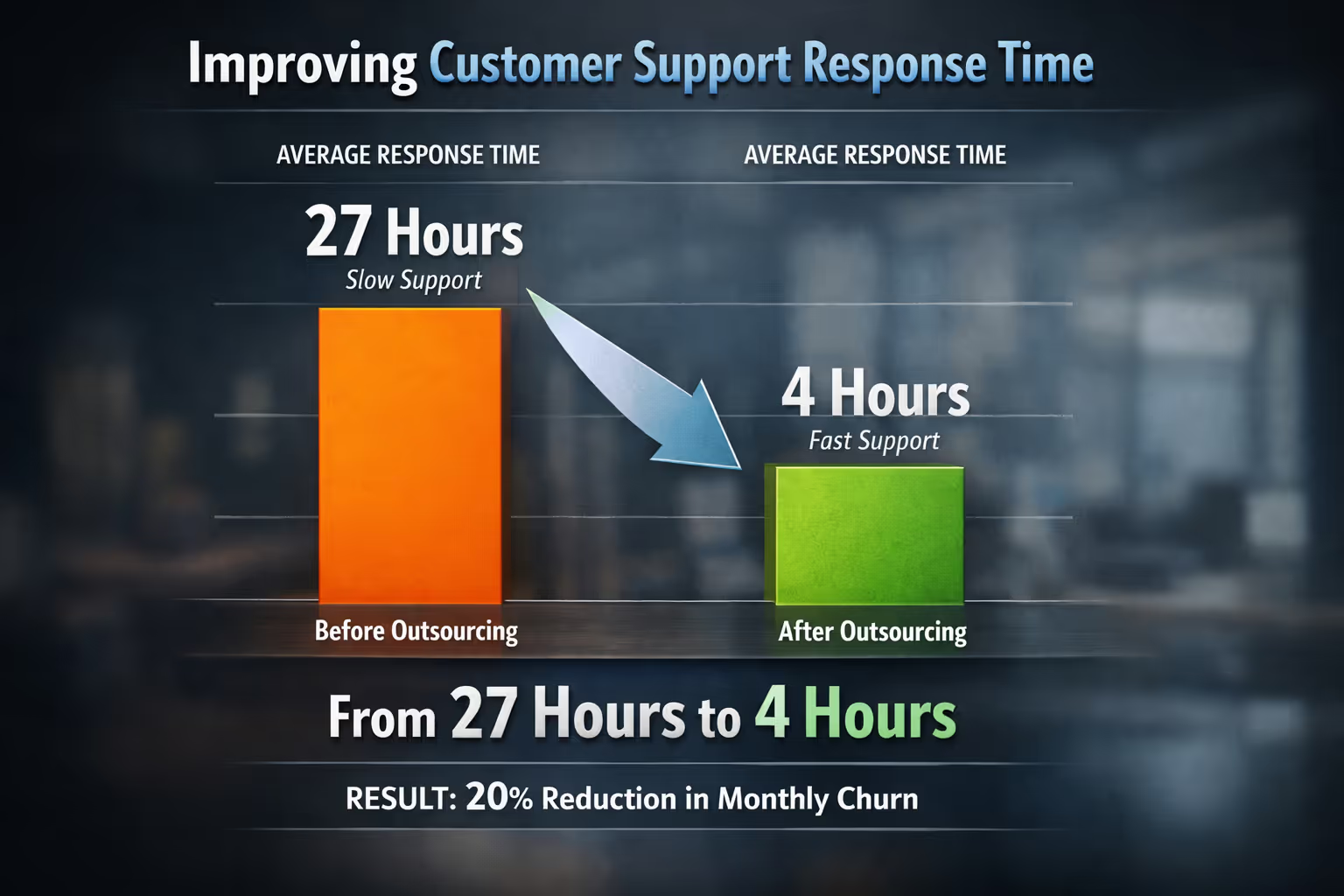
Average first response time: 27 hours
Weekend coverage: None
Technical escalation process: Informal and inconsistent
Documentation: Scattered across Notion, email threads, and the founder's memory
Every delayed response gave customers time to question their subscription. Every unanswered weekend email let frustration compound. The founder knew the problem existed but couldn't clone himself to fix it.
Hiring an in-house support rep seemed like the obvious solution. But the full cost of a dedicated hire—salary, benefits, training, management overhead—would run $50,000 to $70,000 annually for a qualified candidate [5]. For a bootstrapped company watching every dollar, that represented a significant bet.
The Decision to Outsource Support
The founder explored a fractional support team approach instead. Rather than hiring a full-time employee, they partnered with a specialized customer support agency that provided dedicated agents on a usage-based model.
The key requirements were straightforward:
US-based human agents who could match the company's casual, knowledgeable brand voice
Guaranteed response times under 24 hours, Monday through Friday
A structured escalation process for technical issues requiring engineering attention
Documentation systems to capture common questions and solutions
The monthly cost started at roughly $600 based on their ticket volume—significantly less than a full-time hire while providing more consistent coverage through a two-agent team structure.
Onboarding took about a week. The agency reviewed existing support conversations, built out response templates, and drafted initial replies for founder approval before going live. The goal wasn't to replace the founder entirely but to handle the predictable tier-one questions that consumed most of their support time.

Implementation: What Actually Changed
The transition happened in phases rather than all at once.
Week One: Knowledge Transfer
The support team documented the 20 most common customer questions by reviewing historical tickets. They created saved replies for each, matching the founder's tone and incorporating the specific terminology customers used.
Weeks Two Through Four: Supervised Live Support
Agents began responding to tickets with founder oversight. Every response got reviewed initially. By week three, only edge cases required input.
Month Two Onward: Full Ownership
The outsourced team handled all tier-one support independently. They escalated technical bugs and feature requests to the founder through a shared Slack channel, often including preliminary investigation notes so engineering time wasn't wasted on diagnosis.
The most significant operational change wasn't the response content. It was response speed. Average first reply time dropped from 27 hours to under 4 hours. Customers who emailed on Friday afternoon no longer waited until Monday for acknowledgment.
The Retention Results: Breaking Down the 20% Improvement
Six months post-implementation, the numbers told a clear story.
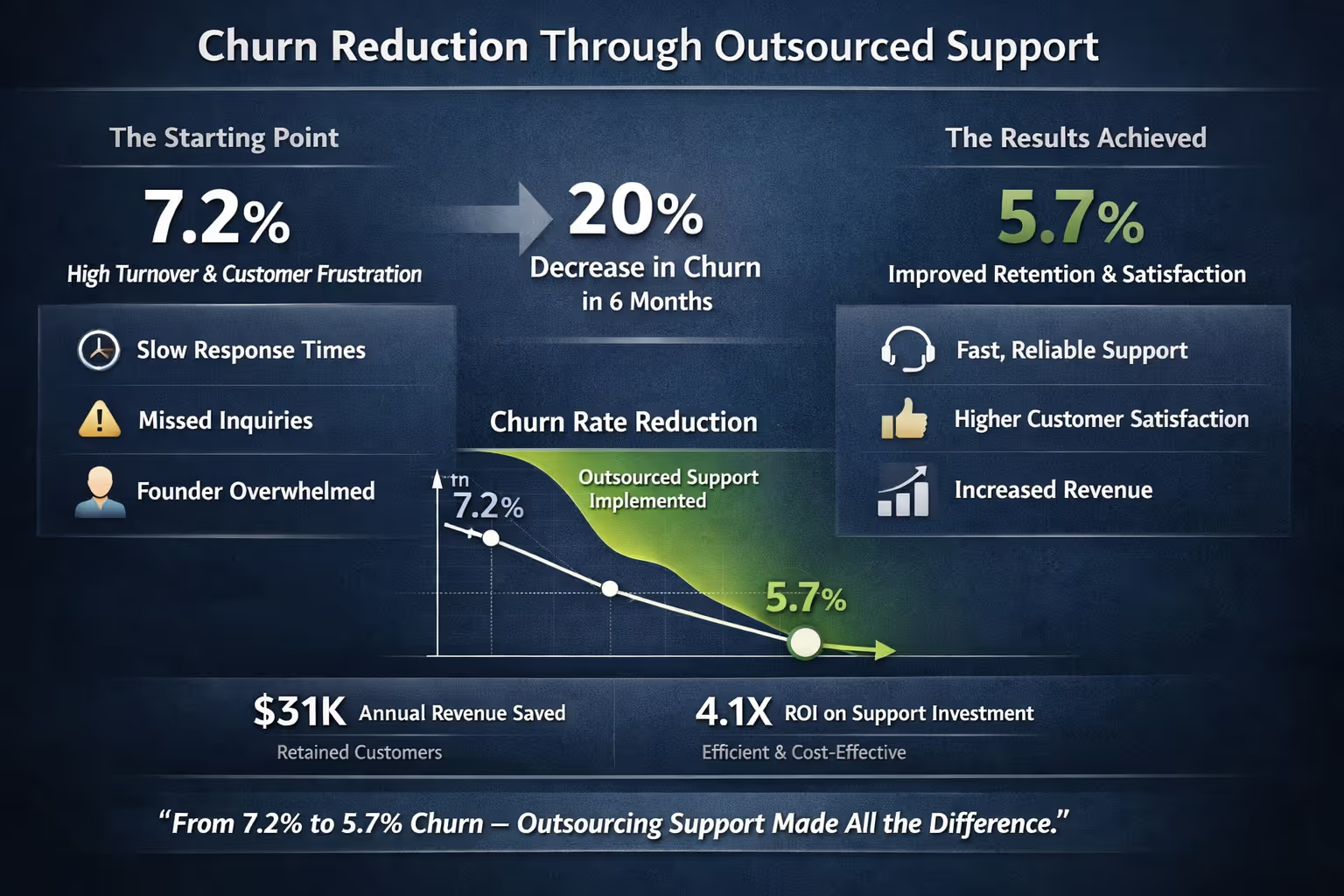
Monthly churn dropped from 7.2% to 5.7%—a 20.8% relative improvement. In absolute terms, that meant retaining approximately 6 additional customers per month who would have otherwise canceled.
At their average customer value of $87 monthly, those retained customers represented roughly $31,000 in preserved annual recurring revenue. Against a support cost of approximately $7,200 annually (their tier at ~100 tickets monthly), the return exceeded 4:1.
But the quantifiable results only told part of the story.
Qualitative improvements included:
Customer satisfaction scores in post-resolution surveys increased from 3.2 to 4.4 out of 5
Negative reviews mentioning "slow support" or "unresponsive" dropped to near zero
Several at-risk enterprise accounts explicitly cited improved support in renewal conversations
The founder also gained back roughly 15 hours weekly. That time went directly into product development and sales conversations—activities that moved the business forward rather than just maintaining it.
Why Support Quality Directly Impacts SaaS Churn
The connection between support and retention isn't coincidental. SaaS products require ongoing customer success to deliver value. Unlike a one-time purchase, subscription software asks customers to repeatedly choose you every billing cycle.
Support interactions often represent the only human touchpoint in that relationship. When a customer hits a problem and reaches out, their experience in that moment shapes their entire perception of your company.
Research from PwC found that 32% of customers would stop doing business with a brand they loved after just one bad experience [6]. In SaaS, where switching costs are often low, that single frustrating support interaction can trigger immediate cancellation.
The startup in this case study discovered that many churned customers hadn't actually encountered product limitations. They'd encountered communication failures. The product could have solved their problems, but they never got the guidance they needed to realize it.
Fast, helpful human support created a different dynamic. Customers felt heard. Problems got resolved before frustration compounded. And the relationship strengthened rather than eroded.
What This Approach Won't Fix
Honest assessment matters here. Outsourced support isn't a magic solution for fundamental product problems.
If customers are churning because your software doesn't deliver value, faster responses won't save them. If your pricing misaligns with the market, excellent support just delays inevitable cancellations. Support can reduce friction-based churn—the customers who leave because they couldn't get help when they needed it. It can't manufacture product-market fit.
This approach also requires investment from the founder, particularly upfront. The onboarding week demands real attention. The agency needs access to your systems, context about your customers, and feedback on early responses. You're not hiring a black box; you're adding team members who need integration.
For companies with fewer than 50 tickets monthly, the math might not justify outsourcing yet. But once support load starts consuming meaningful founder time, the calculus shifts quickly.

The Founder's Perspective: Six Months Later
When asked about the biggest surprise from the transition, the founder pointed to something unexpected: how much better the support actually got compared to what they'd been providing.
"I thought I was doing fine because I knew the product better than anyone," they explained. "But I was also distracted, inconsistent, and sometimes honestly just annoyed to be answering the same questions again. The dedicated team doesn't have that baggage. They're genuinely focused on helping each customer."
The psychological shift mattered as much as the operational one. Knowing that customers were being helped—even while the founder slept, traveled, or focused on a product launch—removed a constant low-grade anxiety that had become background noise.
"I didn't realize how much mental energy I was spending on support guilt until it was gone."
Building the Case for Your Own Support Investment
If you're considering a similar move for your SaaS company, the analysis starts with understanding your current state.
Calculate your support cost (time and money):
Hours spent weekly on customer inquiries
Your effective hourly rate based on other activities you're neglecting
Current response time metrics if you track them
Churn rate and any qualitative feedback about support in exit surveys
Model the potential impact:
Even a 10-15% churn reduction represents significant retained revenue
Factor in the opportunity cost of founder time redirected to growth activities
Consider customer lifetime value, not just monthly subscription price
Evaluate your readiness:
Do you have enough ticket volume to justify dedicated support (typically 50+ monthly)?
Can you articulate your brand voice and common customer scenarios?
Are you willing to invest a week in proper knowledge transfer?
The startup in this case study treated outsourced support as an investment in retention infrastructure, not a cost to minimize. That framing shaped their decisions throughout implementation and contributed to the results they achieved.
Ready to Stop Churn from Draining Your Growth?
If your SaaS customers are leaving because they can't get help when they need it, that's a fixable problem. Human-powered support that responds quickly, matches your brand voice, and treats every customer like they matter can transform retention metrics within months.
Evergreen Support specializes in helping small SaaS and ecommerce teams deliver exceptional customer support without the overhead of full-time hiring. Our US-based team becomes an extension of yours—learning your product, matching your tone, and keeping your inbox covered Monday through Friday.
Curious whether your support setup is helping or hurting retention? Request a free inbox audit. We'll review your current support operation, identify quick wins, and give you honest feedback on whether outsourcing makes sense for your situation. No pressure, just practical insight from people who've seen what works.
[Book your free inbox audit →]
Frequently Asked Questions
How quickly can outsourced support impact SaaS churn rates?
Most companies see measurable improvements within 60 to 90 days of full implementation. The fastest gains come from reducing response times, which immediately affects customer satisfaction. Deeper retention improvements build over three to six months as consistent support quality compounds. The 20% reduction described in this case study emerged over a six-month period following proper onboarding.
What ticket volume justifies outsourcing customer support?
The threshold varies by company, but generally 50 to 100 monthly tickets marks the point where outsourcing becomes cost-effective compared to founder time. Below that volume, you might handle support efficiently yourself. Above it, the time investment starts meaningfully competing with other responsibilities. The key question: is support preventing you from doing work that only you can do?
Will outsourced agents understand my technical SaaS product?
Effective agencies invest in learning your product during onboarding, reviewing past tickets, and building documentation that captures common scenarios. They handle tier-one questions independently while escalating truly technical issues to your team with preliminary notes. You're not replacing engineering knowledge; you're offloading the predictable inquiries that consume most support volume.
How do you maintain brand voice with an external support team?
The onboarding process should include reviewing your existing customer communications, drafting sample responses for your approval, and establishing guidelines for tone and terminology. Ongoing quality comes from consistent agents who learn your brand over time rather than random rotation. Weekly reviews during the first month catch any voice mismatches early.
What's the difference between outsourced support and hiring in-house?
Cost structure is the primary difference. In-house hires involve salary, benefits, training, management time, and coverage gaps during PTO or sick days. Outsourced teams typically charge based on volume, include built-in backup coverage, and don't require benefits administration. The tradeoff: you have less direct control and need clear communication channels to maintain alignment with a distributed team.
About Evergreen Support
Evergreen Support was founded by customer support professionals who experienced firsthand the challenges small businesses face managing their inboxes. Our US-based team works exclusively with SaaS and ecommerce companies, providing human-powered support that preserves the personal touch your customers expect. We've helped bootstrapped founders reclaim their time while improving response quality—no AI chatbots, no offshore call centers, just experienced people who care about getting it right.
Works Cited
[1] Reichheld, Frederick F. — "Prescription for Cutting Costs." Bain & Company / Harvard Business School Publishing. https://hbswk.hbs.edu/archive/the-economics-of-e-loyalty
[2] Invesp — "Customer Acquisition vs. Retention Costs – Statistics and Trends." https://www.invespcro.com/blog/customer-acquisition-retention/
[3] Recurly Research — "SaaS Churn Rate Benchmarks." https://recurly.com/research/churn-rate-benchmarks/
[4] HubSpot — "The State of Customer Service Report." https://www.hubspot.com/state-of-service
[5] Bureau of Labor Statistics — "Occupational Employment and Wages: Customer Service Representatives." https://www.bls.gov/oes/current/oes434051.htm
[6] PwC — "Experience is Everything: Here's How to Get It Right." https://www.pwc.com/us/en/services/consulting/library/consumer-intelligence-series/future-of-customer-experience.html


