
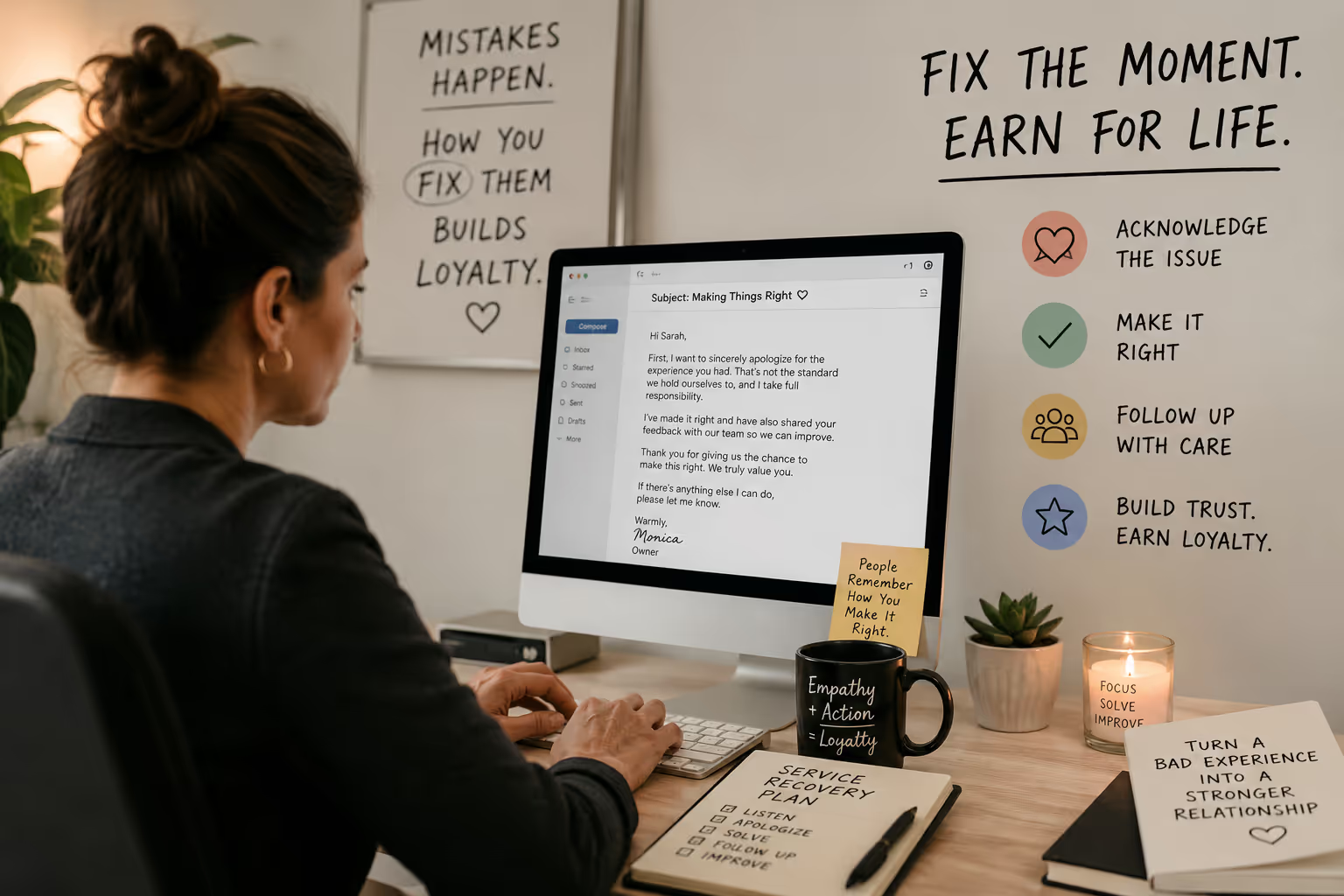
Something went wrong. The shipment is three days late. The checkout page crashed during a flash sale. A bug wiped a customer's saved data. Now there's an angry email sitting in your inbox, and you have about fifteen minutes before frustration turns into a refund request—or worse, a one-star review.
Most small business owners treat service recovery emails like damage control. Apologize, offer a discount, move on. But that approach misses something important: customers who experience a well-handled service failure often become more loyal than customers who never had a problem at all. Researchers call this the "service recovery paradox," and it's been documented across industries for decades [1].
The difference between a customer who leaves angry and one who becomes a vocal advocate comes down to how you structure your response. Not just what you say—but the specific order, the commitments you make, and the follow-up that happens after.
This guide gives you a practical framework for writing service recovery emails that actually work. You'll get the exact five-part structure, real templates for common ecommerce and SaaS situations, guidance on response timing, and the follow-up sequences that turn mistakes into loyalty.
Why Most Apology Emails Fall Flat
Generic apology templates sound generic. Customers can smell a copy-paste response from a mile away, and it makes them feel like just another ticket number.
The typical bad apology hits one or two notes: "We're sorry" plus "Here's 10% off." But that misses what the customer actually needs to hear.
What customers typically get:
A vague acknowledgment ("We apologize for any inconvenience")
An impersonal discount code
No explanation of what went wrong
No timeline for resolution
Radio silence after the initial reply
What customers actually need:
Specific acknowledgment that you understand their exact problem
Confidence that you're fixing it
A clear timeline for what happens next
A reason to believe this won't happen again
Proof that you followed through
Research published in the Journal of Business Research found that effective service recovery requires three components: acknowledgment of the failure, explanation of the cause, and clear compensation or corrective action [2]. Most apology emails nail the first one and completely skip the other two.
The stakes here aren't abstract. According to Zendesk's 2023 CX Trends Report, roughly half of customers say they would switch to a competitor after just one bad experience [3]. For small teams without dedicated support staff, every recovery email carries real weight.
The 5-Part Service Recovery Framework
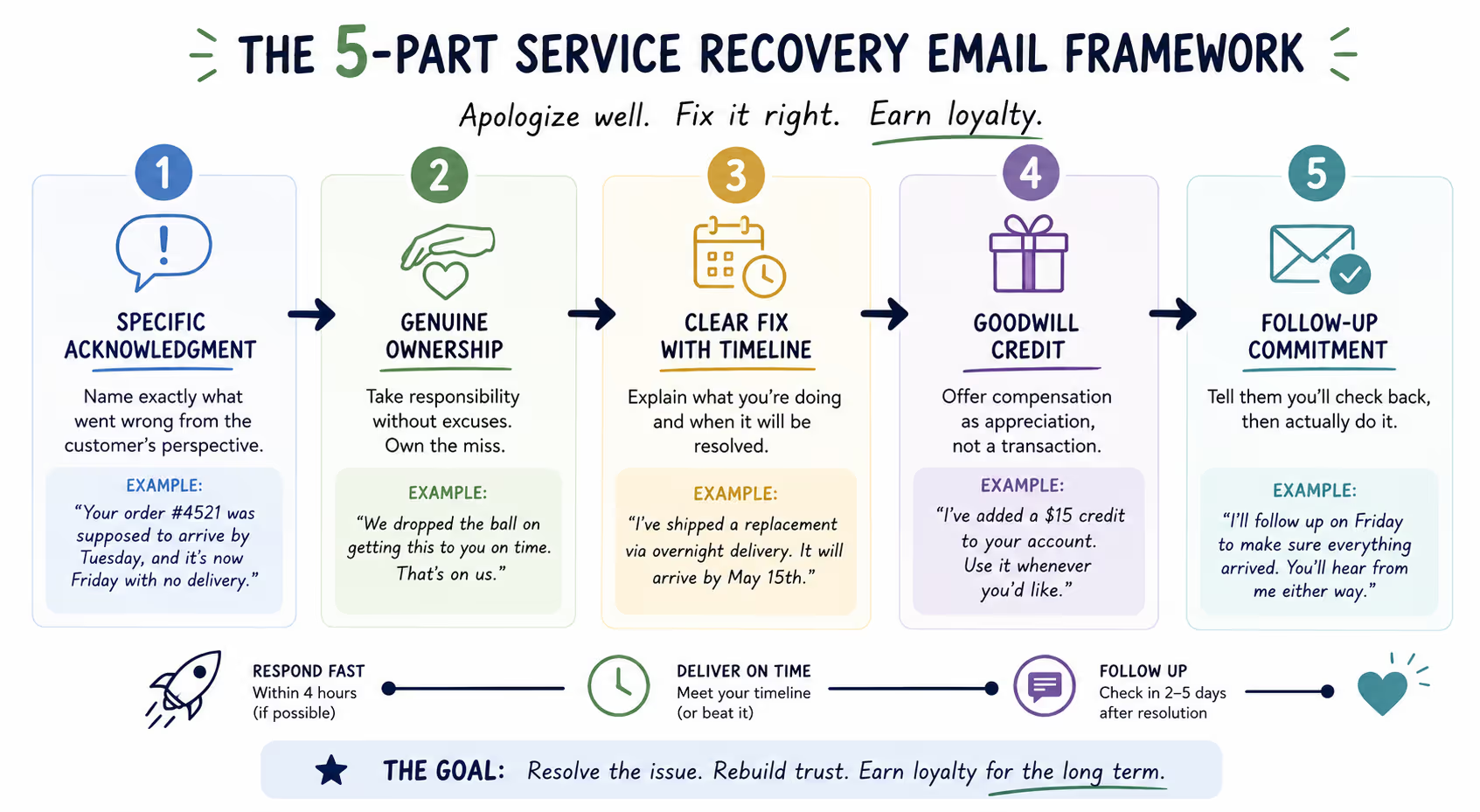
This framework works because it mirrors how humans process disappointment and rebuild trust. Each section has a specific job, and the order matters.
Quick reference—the five parts:
Specific Acknowledgment — Name exactly what went wrong
Genuine Ownership — Take responsibility without excuses
Clear Fix with Timeline — Explain what you're doing and when it will be resolved
Goodwill Credit — Offer compensation framed as appreciation, not a transaction
Follow-Up Commitment — Tell them you'll check back, then actually do it
Let's walk through each part.
Part 1: Specific Acknowledgment
Start by naming exactly what went wrong from the customer's perspective. Not a vague "We apologize for any inconvenience"—that phrase should be permanently retired. Instead, state the specific failure.
"Your order #4521 was supposed to arrive by Tuesday, and it's now Friday with no delivery in sight."
"The bug you reported deleted your saved templates, and I know you spent hours building those."
This does two things. First, it proves you actually read their message. Second, it validates their frustration by confirming that yes, this is a real problem worth being upset about.
Part 2: Genuine Ownership
Take responsibility without making excuses. This is where many businesses stumble—they explain why the problem happened in a way that sounds like blame-shifting.
Sounds like blame-shifting: "Due to unprecedented shipping volume from our carrier..."
Sounds like ownership: "We dropped the ball on getting this to you on time. That's on us."
Ownership doesn't mean you need to accept blame for things outside your control. If a carrier lost the package, you can acknowledge that while still owning the customer's experience: "Even though the carrier lost your package, we should have caught this sooner and reached out before you had to chase us down."
Part 3: Clear Fix with Timeline
This is the section most apology emails completely skip, and it's arguably the most important one. Tell the customer exactly what you're doing to fix the problem, and give them a specific timeline.
Vague: "We're working on it."
Specific: "I've already shipped a replacement via overnight delivery. It will arrive by Thursday, May 15th. Here's your new tracking number: [link]."
The timeline commitment is crucial. Research on service recovery shows that perceived control significantly impacts customer satisfaction after a failure [4]. When customers know exactly when their problem will be resolved, their stress drops immediately.
If you can't give an exact resolution date, give a timeline for the next update: "I'm escalating this to our engineering team right now. I'll email you by 5pm tomorrow with an update, even if we're still working on it."
Part 4: Goodwill Credit
Compensation comes in here—but frame it as goodwill, not a transaction. The goal isn't to "buy" forgiveness. It's to acknowledge that the customer's time and trust have value.
"I've added a $15 credit to your account. Use it whenever you'd like, no strings attached."
"Your next month is on us. The credit has already been applied."
Notice the framing: it's already done, not conditional on anything. You're not asking them to do anything to claim it. This removes friction and signals that you're making things right regardless of whether they stay or go.
The amount matters less than you think. Research on service recovery shows that customers value the gesture and the speed of resolution more than the monetary value of compensation [5].
Part 5: Follow-Up Commitment
This is the part that separates adequate recovery from exceptional recovery. Tell them you're going to check back in, and then actually do it.
"I'm going to follow up on Friday to make sure everything arrived in good shape."
"I'll check back in three days to confirm the fix is holding. You'll hear from me either way."
The follow-up commitment shows you're not just closing a ticket—you're investing in the relationship. And when you actually send that follow-up (which you absolutely must), you demonstrate reliability at exactly the moment they might be questioning whether they can trust you.
Timing: When to Send Each Part
Speed matters in service recovery—but so does getting it right. Here's how to think about timing.
Initial response: Within 4 hours during business hours, ideally faster
The first reply doesn't need to have every answer. It needs to show you've seen the problem, you care, and you're working on it. If you can't fully resolve the issue immediately, acknowledge it and set expectations for when you'll have more information.
For serious issues (data loss, major outages, significant order problems), aim for under an hour if you can. The faster you respond, the less time frustration has to compound.
Resolution timeline: Be specific, then beat it
Whatever timeline you commit to, try to resolve things faster. If you say "by Friday," and you deliver Thursday, you've created a small positive surprise in the middle of a negative experience.
Follow-up email: 2-5 days after resolution
Don't follow up the same day you resolve the issue—that feels like you're fishing for praise. Wait long enough that they've had time to actually use the fix or receive the replacement, but not so long that the issue feels like ancient history.
Ecommerce Apology Email Templates: Late Shipments and Order Errors
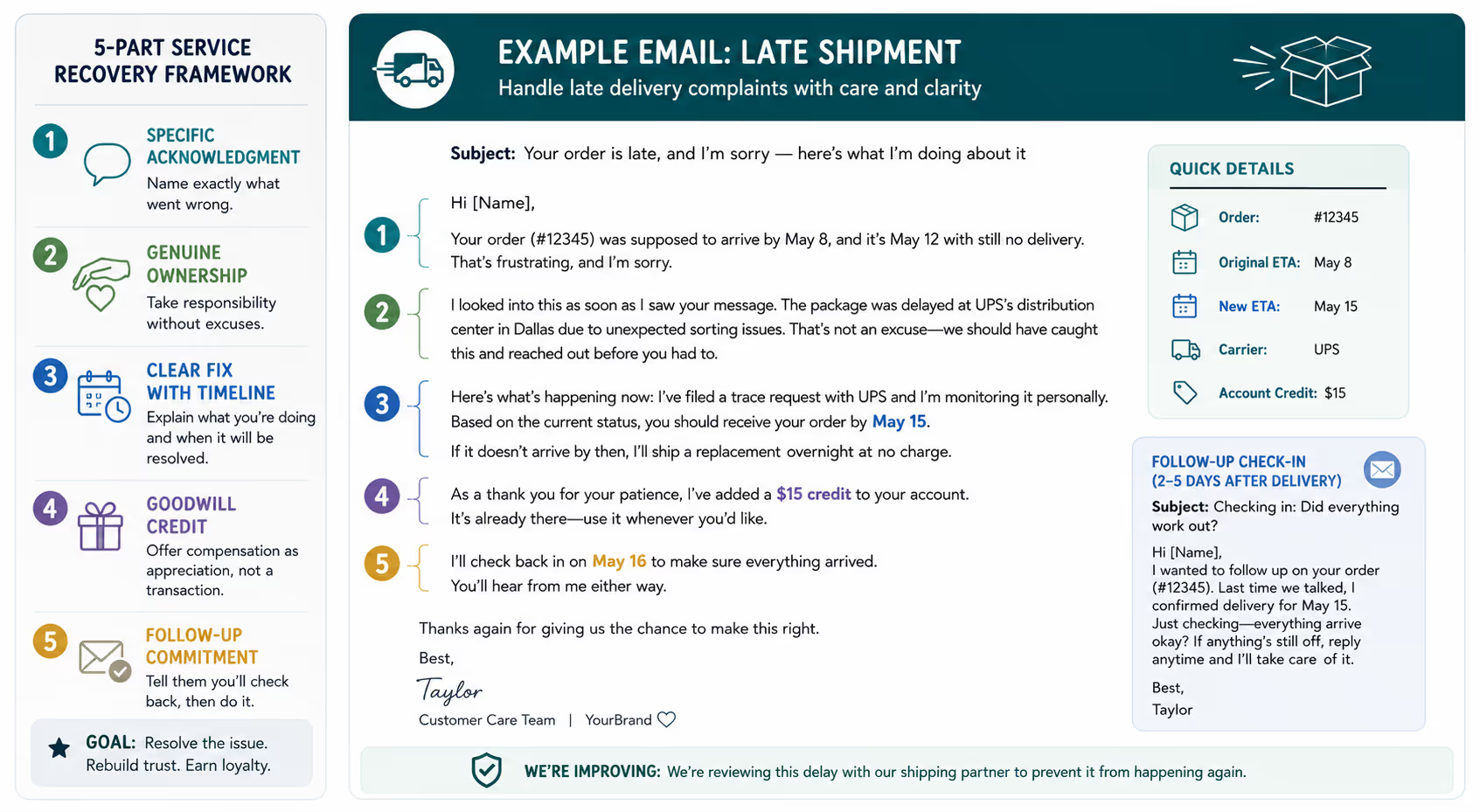
Below are ready-to-use templates for the most common ecommerce service failures. Each one follows the five-part framework.
Template: Late Shipment
**Subject: Your order is late, and I'm sorry — here's what I'm doing about it**
Hi [Name],
Your order (#[number]) was supposed to arrive by [original date], and it's [today's date] with still no delivery. That's frustrating, and I'm sorry.
I looked into this as soon as I saw your message. The package got delayed at [carrier name]'s distribution center in [location]. That's not an excuse—we should have caught this and reached out before you had to.
Here's what's happening now: I've filed a trace request with [carrier], and I'm monitoring it personally. Based on the current status, you should receive your order by [new date]. If it doesn't show up by then, I'll ship a replacement overnight at no charge.
As a thank you for your patience, I've added a $[amount] credit to your account. It's already there—use it whenever you'd like.
I'll check back in on [follow-up date] to make sure everything arrived. You'll hear from me either way.
[Signature]
Template: Wrong Item Shipped
Subject: We sent the wrong item — your correct order is already on the way
Hi [Name],
You ordered [correct item], and we sent you [wrong item]. That's a frustrating mistake, and I'm sorry.
Your correct order is already on its way via [shipping method]. It should arrive by [date]. Here's the tracking: [link].
Don't worry about returning the wrong item—keep it, donate it, or toss it. That's the least we can do for the hassle.
I've also added a $[amount] credit to your account as a thank you for your patience.
I'll follow up on [date] to confirm everything arrived correctly.
[Signature]
Template: Damaged Product
Subject: I'm sorry your order arrived damaged — replacement shipping today
Hi [Name],
You just sent me a photo of [product] arriving damaged. That's the opposite of what should happen, and I'm sorry.
I've already processed a replacement, and it's shipping today via [expedited method]. You'll receive a tracking email within the hour, and it should arrive by [date].
No need to return the damaged item—I don't want to add any more hassle to your day.
I've added a $[amount] credit to your account. Use it whenever you'd like.
I'll reach out on [date] to make sure the replacement arrived in perfect condition.
[Signature]
SaaS Apology Email Templates: Bugs, Outages, and Data Issues
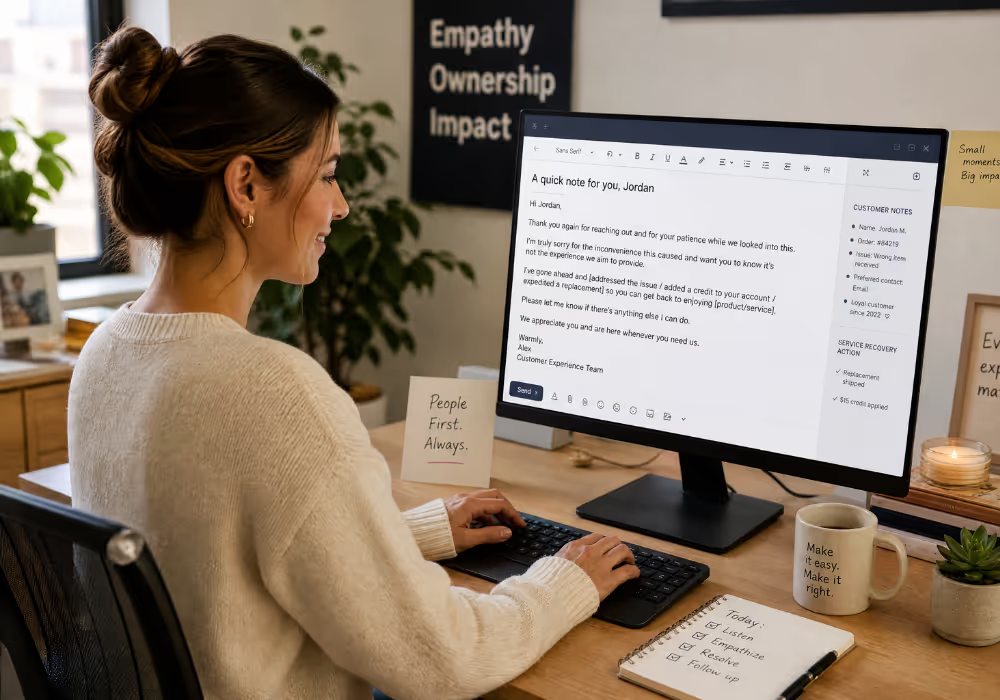
Software problems require a slightly different approach. Users often need reassurance that the bug won't happen again—and if data was lost, they need to understand exactly what's recoverable.
Template: Bug That Caused Data Loss
Subject: About the bug that affected your [feature name] — here's where we are
Hi [Name],
I just saw your message about [specific data] disappearing from your account. I know you put real work into building that, and losing it is incredibly frustrating. I'm sorry this happened.
Here's what we know: A bug in [brief non-technical explanation] caused [specific data type] created between [time range] to be deleted. Our engineering team identified the issue and deployed a fix at [time] today. This won't happen again.
On your data: We were able to recover [X]. I've already restored it to your account—you should see it when you log in. Unfortunately, [Y] was not recoverable from our backups. I wish I had better news on that piece.
To help offset the time you'll spend rebuilding, I've added [specific credit/compensation] to your account.
I'm going to follow up in 48 hours to see how the rebuild is going and if there's anything else I can help with.
[Signature]
Template: Major Outage
Subject: [Product] outage this morning — what happened and what we're doing
Hi [Name],
[Product] was down for [duration] this morning, and I know that disrupted your work. I'm sorry.
Here's what happened: [Brief, honest explanation—e.g., "A database server failed, and our backup failover didn't kick in as fast as it should have."] We've identified the root cause and are implementing [specific fix] to prevent this from recurring.
Your data is safe and unchanged. Nothing was lost during the outage.
Because this outage affected your [specific plan/service], I've credited your account with [specific compensation—extra days, refund, etc.]. That's already applied.
I'll send a full post-mortem to all affected customers by [date], including the specific changes we're making to prevent future outages.
[Signature]
Template: Feature Bug Affecting Workflow
Subject: The [feature] bug you reported — fixed, with an explanation
Hi [Name],
You reported that [specific bug behavior]. You were right—that was a bug on our end, and I'm sorry it disrupted your workflow.
Our team deployed a fix about [X hours/minutes] ago. If you try [action] now, it should work correctly. Let me know if you see anything different.
Here's what happened: [Brief explanation, e.g., "A recent update accidentally broke the connection between X and Y. We've rolled back the problematic change and added tests to catch this in the future."]
I've added [specific credit/extension] to your account as a thank you for reporting this. Bug reports from users like you help us build a better product.
I'll check back in on [date] to make sure everything is working smoothly on your end.
[Signature]
The Follow-Up Check-In Email
You committed to following up. Here's how to do it without being annoying.
Subject: Checking in: Did everything work out?
Hi [Name],
I wanted to follow up on [the issue—be specific]. Last time we talked, I [what you did—shipped a replacement, applied a fix, etc.].
Just checking: Is everything working the way it should? If anything's still off, hit reply and let me know—I'll take care of it.
[Signature]
Keep it short. The follow-up email should take ten seconds to read and require zero effort to respond to.
If they don't respond, that's fine. The act of following up is what builds trust. They know you kept your word.
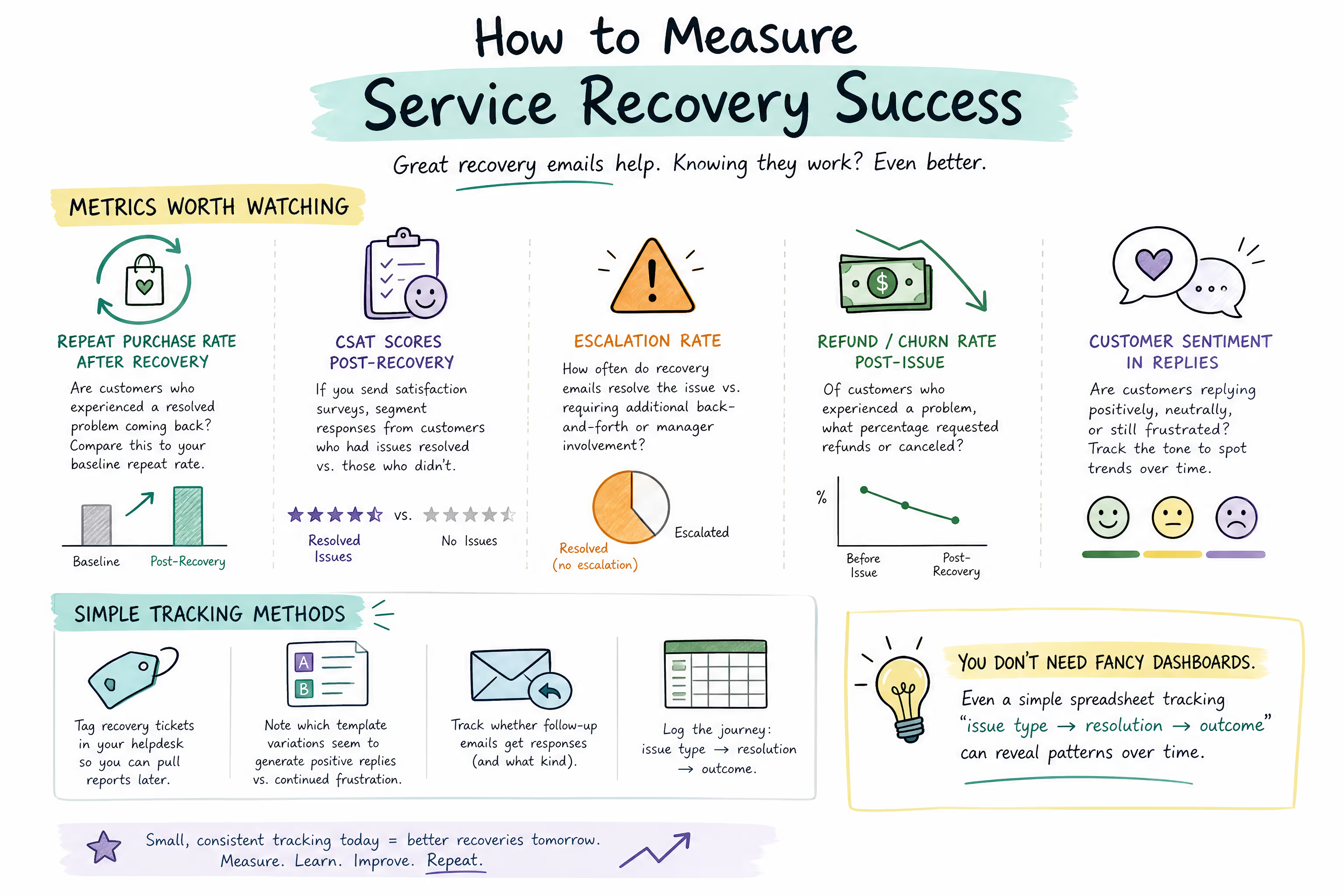
How to Measure Service Recovery Success
Writing great recovery emails is only half the equation. You also need to know whether they're actually working. For small teams without sophisticated analytics, here are practical ways to track your service recovery effectiveness:
Metrics worth watching:
Repeat purchase rate after recovery: Are customers who experienced a resolved problem coming back? Compare this to your baseline repeat rate.
CSAT scores post-recovery: If you send satisfaction surveys, segment responses from customers who had issues resolved vs. those who didn't.
Escalation rate: How often do recovery emails resolve the issue vs. requiring additional back-and-forth or manager involvement?
Refund/churn rate post-issue: Of customers who experienced a problem, what percentage requested refunds or canceled?
Simple tracking methods:
Tag recovery tickets in your helpdesk (e.g., "service-recovery-late-shipment") so you can pull reports later
Note which template variations seem to generate positive replies vs. continued frustration
Track whether follow-up emails get responses (and what kind)
You don't need fancy dashboards. Even a simple spreadsheet tracking "issue type → resolution → outcome" can reveal patterns over time.
When Service Recovery Becomes Unsustainable
If you're running a small ecommerce store or SaaS company, you're probably the one writing these emails. And when things go wrong for multiple customers at once—a carrier delay affecting dozens of orders, a bug impacting your entire user base—the inbox becomes overwhelming fast.
Here's the hard truth: high-emotion tickets are exhausting. Each one requires careful attention, thoughtful personalization, and genuine empathy. You can't phone it in when someone's angry. And every recovery email you send creates a follow-up commitment—another thing you have to remember to do three days from now while also running the rest of your business.
When you're copying and pasting templates at 11pm, tweaking them just enough to feel personal, knowing you'll need to manually set a reminder to follow up... that's a sign you've outgrown DIY support.
The frustrating part is that service recovery is exactly where quality matters most. A generic response to a routine question? Probably fine. A generic response to an angry customer who just lost their data? That's how you lose customers for good.
This is one of the areas where having dedicated support—whether in-house or outsourced—makes a real difference. A consistent team that knows your brand voice can handle service recovery with the same care you would, send the follow-ups on time, and track patterns you'd miss while buried in your inbox.
If you're drowning in support tickets and worried about maintaining quality during service recovery, that might be worth a conversation. Book a call with Evergreen Support to talk through whether outsourced human support makes sense for your situation.
Frequently Asked Questions
How much compensation should I offer in a service recovery email?
The amount matters less than the speed and framing. Customers value the gesture and resolution speed more than the dollar value. A good starting point: offer enough to feel meaningful without being so large it seems like a bribe. For most ecommerce situations, matching the shipping cost or offering a modest store credit ($10-20) works well. For SaaS, prorated refunds or account extensions are standard. The key is making it feel like genuine goodwill, not a calculated transaction.
Should I apologize even if the problem wasn't entirely my fault?
Yes—but own the customer's experience, not someone else's failure. If a carrier lost a package, you can say "Even though this was a carrier issue, we should have caught it sooner." You're not accepting blame for the carrier. You're accepting responsibility for the customer's experience with your company. That distinction matters, and customers can tell the difference between genuine ownership and weasel words.
What if the customer is being unreasonable or abusive?
The five-part framework still applies, but you're not obligated to tolerate abuse. Acknowledge their frustration, state what you can do, and set boundaries calmly. If a customer crosses into abusive language, it's okay to say "I want to help resolve this, but I need our conversation to stay respectful." Most angry customers will calm down when they feel genuinely heard—the framework helps with that. But some won't, and that's not a failure on your part.
How do I handle service recovery when I can't actually fix the problem?
Be honest about what's possible and what isn't. If data is unrecoverable, say so clearly—don't leave them hoping. Then focus on what you can do: compensation, help rebuilding, a detailed explanation of what you're doing to prevent it from happening again. Honesty about limitations builds more trust than false optimism. Customers can handle bad news; what they can't handle is being strung along.
How many follow-ups are too many?
One proactive follow-up is expected. Two is acceptable if the issue was serious. More than that starts to feel like you're seeking validation rather than helping. The exception: if the customer responds and opens a dialogue, follow as many times as the conversation requires. The goal is to ensure resolution, not to prove you care.
About This Guide
This guide was created by Evergreen Support, a human-powered customer support agency for small SaaS and ecommerce businesses. We specialize in helping founders and small teams deliver consistent, high-quality support—including handling high-emotion situations like service recovery—without sacrificing the personal touch that customers expect. All support is provided by US-based agents, not AI chatbots.
Works Cited
[1] Smith, A.K., Bolton, R.N., & Wagner, J. — "A Model of Customer Satisfaction with Service Encounters Involving Failure and Recovery." Journal of Marketing Research. https://journals.sagepub.com/doi/10.1177/002224379903600305
[2] Joireman, J., Grégoire, Y., & Tripp, T.M. — "Customer Forgiveness Following Service Failures." Journal of Business Research. https://www.sciencedirect.com/science/article/abs/pii/S0148296315003458
[3] Zendesk — "CX Trends 2023." https://www.zendesk.com/blog/cx-trends-2023/
[4] Hui, M.K., & Bateson, J.E.G. — "Perceived Control and the Effects of Crowding and Consumer Choice on the Service Experience." Journal of Consumer Research. https://academic.oup.com/jcr/article-abstract/18/2/174/1792781
[5] Tax, S.S., Brown, S.W., & Chandrashekaran, M. — "Customer Evaluations of Service Complaint Experiences: Implications for Relationship Marketing." Journal of Marketing. https://journals.sagepub.com/doi/10.1177/002224299806200205


