
Your best customer just emailed. Something went wrong with their order, and now you're staring at your inbox wondering: do I refund them, replace the item, or offer store credit?
I watched this exact scenario play out with a friend who runs a Shopify store. Her highest-spending customer—someone who'd purchased from her maybe fifteen times over three years—received a damaged product. My friend agonized over the response for two hours. She kept second-guessing herself: "Am I being too generous? Not generous enough? What if I set a bad precedent?"
She eventually made the right call (full replacement plus a credit for the hassle), but the mental energy it drained was absurd. That's when I realized most small ecommerce teams are flying blind on service recovery decisions.
Here's the thing most ecommerce guides won't tell you: there's no universal "right answer" to VIP refund decisions. But there is a systematic way to think through each situation so you're not second-guessing yourself at 11pm while your inbox piles up.
This guide gives you a practical decision tree for handling refunds, replacements, and store credit offers—plus copy-ready email templates you can adapt for your own store. Whether you're a founder handling support yourself or training someone new, this framework will help you make confident decisions that protect both customer relationships and your margins.
Why VIP Customers Deserve a Different Refund Approach
Not all customers are equal when it comes to service recovery. That's not about playing favorites—it's about recognizing that your relationship history with a customer should inform how you handle problems.
A first-time buyer who received a damaged item has different expectations than someone who's ordered from you twelve times over three years. Both deserve excellent service. But the appropriate response might look different.
The numbers back this up. Research from Bain & Company suggests that increasing customer retention by just 5% can boost profits by 25% to 95% [1]. Your VIP customers represent the bulk of that retention value.
And here's what makes service recovery fascinating: studies on the "service recovery paradox" show that customers who experience a problem that gets resolved exceptionally well often become more loyal than customers who never had a problem at all [2]. Your refund decisions aren't just damage control—they're loyalty-building opportunities.
For VIP customers specifically, the stakes are higher. These are the people who:
Generate disproportionate lifetime revenue (often 5-10x a typical customer)
Refer friends and family to your store
Leave detailed positive reviews
Forgive occasional small mistakes because they trust you
Losing a VIP customer over a poorly handled refund situation is one of the most expensive mistakes a small ecommerce business can make. The cost of acquiring a new customer to replace them far exceeds the cost of almost any reasonable service recovery gesture.
The Three-Factor Framework for Refund Decisions
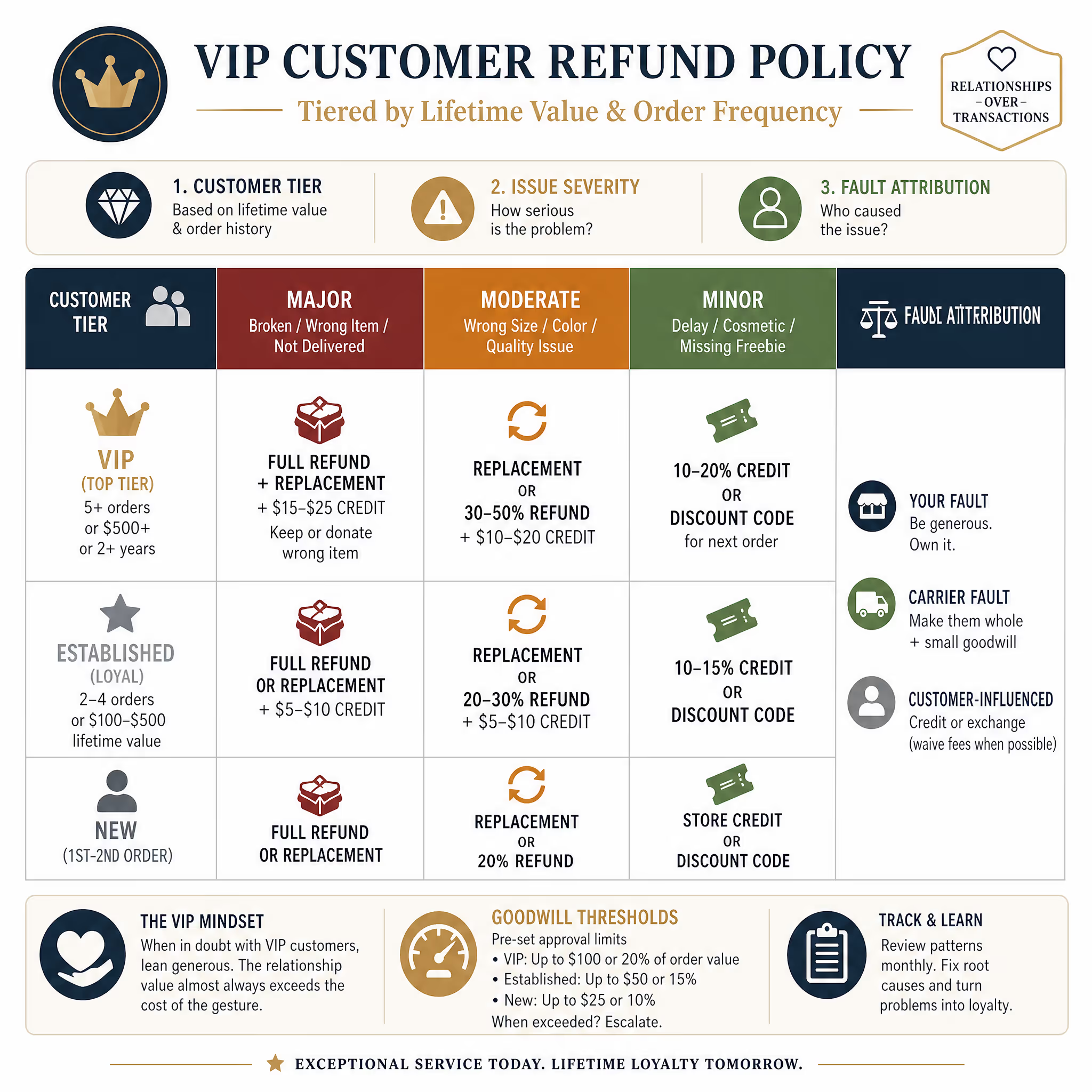
Before diving into the decision tree, you need to assess three things about every service recovery situation:
Factor 1: Customer Value Tier
How much has this customer spent with you, and over what timeframe? A simple way to categorize:
| Tier | Criteria |
| VIP (Top Tier) | Lifetime value over $500, or 5+ orders, or 2+ years as a customer |
| Established | 2-4 previous orders, or $100-$500 lifetime value |
| New | First or second order |
These thresholds will vary based on your average order value and product category. A jewelry store might set VIP at $2,000+ lifetime value, while a consumables brand might set it at $300+. The point is having clear tiers before problems arise.
How to identify VIP customers quickly: Most ecommerce platforms (Shopify, WooCommerce, BigCommerce) show customer order history directly in the order or customer record. For faster identification, consider tagging VIP customers in your system using customer tags or segments. Tools like Gorgias or Zendesk can display this information automatically when a ticket comes in, so whoever handles support can identify VIPs instantly without manually calculating lifetime value.
Factor 2: Issue Severity
What actually went wrong? Categorize the issue:
| Severity | Examples |
| Minor | Slight shipping delay (1-2 days), cosmetic imperfection that doesn't affect function, missing freebie or sample |
| Moderate | Wrong size/color shipped, noticeable quality issue, significant delay (3+ days), minor damage |
| Major | Item arrived damaged/broken, completely wrong item shipped, item never arrived, safety concern |
Factor 3: Fault Attribution
Who caused the problem?
| Attribution | Examples |
| Your fault | Warehouse error, quality control miss, misleading product description, packaging failure |
| Carrier fault | Shipping damage, lost package, delivery to wrong address, weather delay |
| Customer-influenced | Ordered wrong size, didn't read product specs, buyer's remorse, changed mind |
These three factors combine to guide your response. A VIP customer experiencing a major problem that's clearly your fault needs a very different response than a new customer with a minor issue they contributed to.
The VIP Refund Decision Tree: A Visual Guide
Before diving into specific scenarios, here's the core logic:
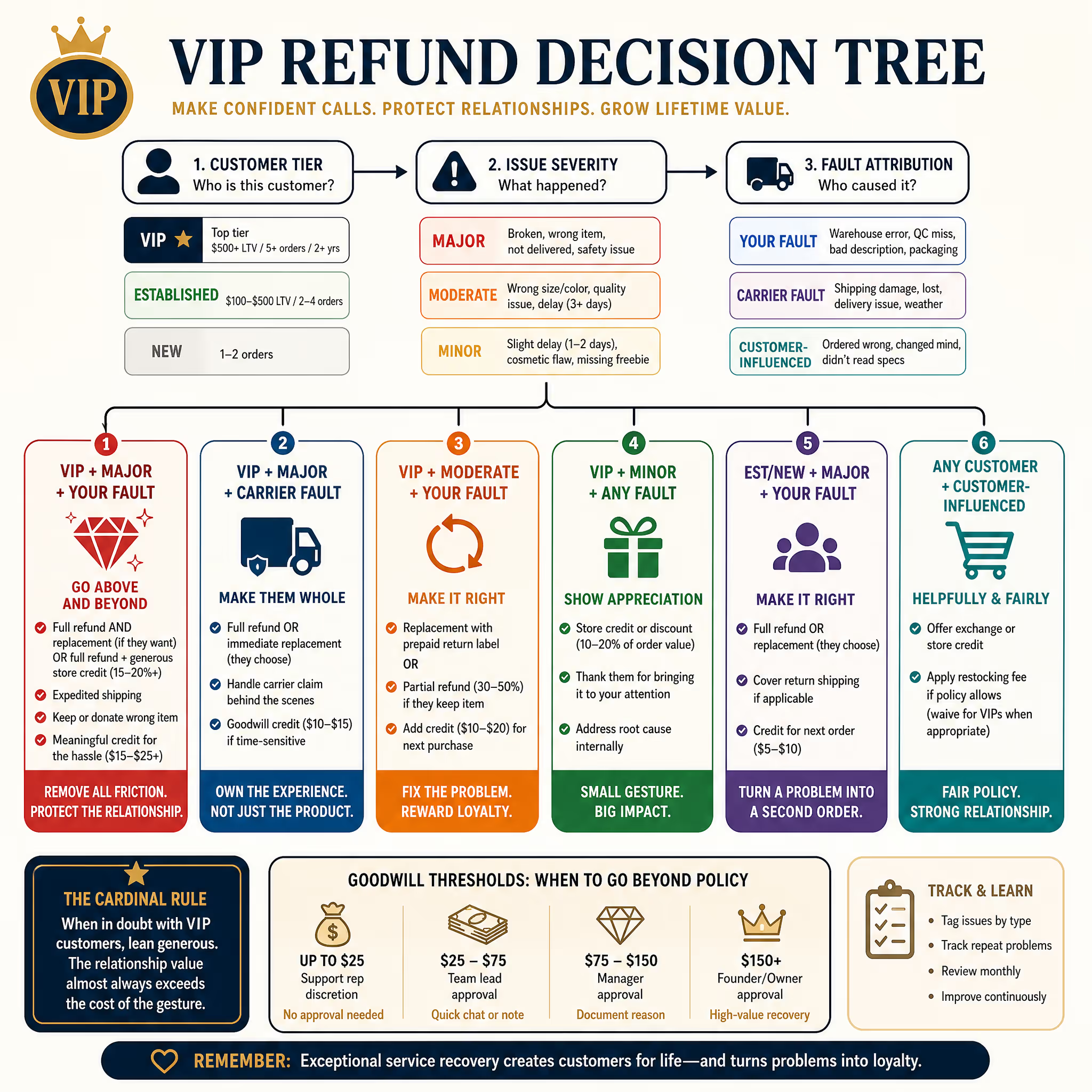
START: Customer reports issue ↓ Identify customer tier (VIP / Established / New) ↓ Assess issue severity (Major / Moderate / Minor) ↓ Determine fault attribution (Your fault / Carrier / Customer-influenced) ↓ Match to scenario below ↓ Apply recommended response
The Cardinal Rule: When in doubt with VIP customers, lean generous. The relationship value almost always exceeds the cost of the gesture.
Scenario 1: VIP Customer + Major Issue + Your Fault
Default response: Full refund AND replacement (if they want the item) OR full refund + generous store credit
This is the situation where you go above and beyond without hesitation. The math is simple: this customer's lifetime value far exceeds the cost of making this right, even if it means eating the cost of the original item plus the replacement.
Example: Your warehouse shipped the wrong product entirely to a customer who's ordered from you eight times over two years.
What to do:
Apologize sincerely and specifically (not a generic "sorry for any inconvenience")
Ship the correct item immediately at no charge via expedited shipping
Tell them to keep or donate the wrong item—don't make them deal with returns
Add a meaningful credit ($15-25 or 15-20% of order value) for their next order
Why this works: You're removing all friction from their experience and demonstrating that you value the relationship more than the cost of the mistake.
Scenario 2: VIP Customer + Major Issue + Carrier Fault
Default response: Full refund OR immediate replacement (customer's choice), plus goodwill gesture if item was time-sensitive
Even when the carrier caused the problem, your VIP customer chose to buy from you—not from FedEx or UPS. To them, the experience is your responsibility. Fight the carrier claim on the backend; make the customer whole on the frontend.
A note on carrier claims: Success with carrier claims often depends on the shipping insurance you use. Services like Route, Shipsurance, or direct carrier insurance can help you recover costs. But regardless of whether you can recover the money, don't make the customer wait for your claim resolution.
What to do:
Apologize for their experience (not for "the carrier's mistake"—own it)
Offer replacement shipment immediately OR full refund—let them choose
Handle the carrier claim yourself without involving the customer
Consider a small goodwill credit ($10-15) if the item was time-sensitive (gift, event, etc.)
Scenario 3: VIP Customer + Moderate Issue + Your Fault
Default response: Replacement with prepaid return label OR partial refund (30-50%) plus store credit
For issues like wrong color shipped or a noticeable quality defect, you want to make it right without necessarily giving away the farm.
What to do:
Acknowledge the specific issue—show you understand what went wrong
Offer a replacement with prepaid return label, OR
Offer partial refund (30-50% depending on severity) if they want to keep the item as-is
Add a credit toward their next purchase ($10-20) as a relationship gesture
Scenario 4: VIP Customer + Minor Issue + Any Fault
Default response: Store credit (10-20% of order value) OR discount code for next order
Minor issues with VIP customers are opportunities to demonstrate attentiveness without overcompensating.
What to do:
Thank them for bringing it to your attention
Offer a credit or discount as appreciation for their patience
Address the root cause internally (track recurring minor issues)
Scenario 5: Established/New Customer + Major Issue + Your Fault
Default response: Full refund OR replacement—customer's choice
You want to make it right, but you don't need to go as far above-and-beyond as you would for a VIP. The goal is turning a potential one-time buyer into a repeat customer.
What to do:
Apologize clearly and take ownership
Offer their choice of refund or replacement
Cover return shipping if applicable
Consider a small credit ($5-10) for next order to encourage them to give you another chance
Scenario 6: Any Customer + Any Issue + Customer-Influenced
Default response: Store credit (minus restocking if applicable) OR exchange
When the customer ordered the wrong size or didn't read the product description carefully, you're still providing service—but you're not obligated to absorb the full cost.
What to do:
Respond helpfully without assigning blame
Offer exchange or store credit
Apply reasonable restocking fee if your policy allows and the item requires inspection/repackaging
For VIP customers: Consider waiving the restocking fee as a relationship gesture
Goodwill Thresholds: When to Go Beyond Policy
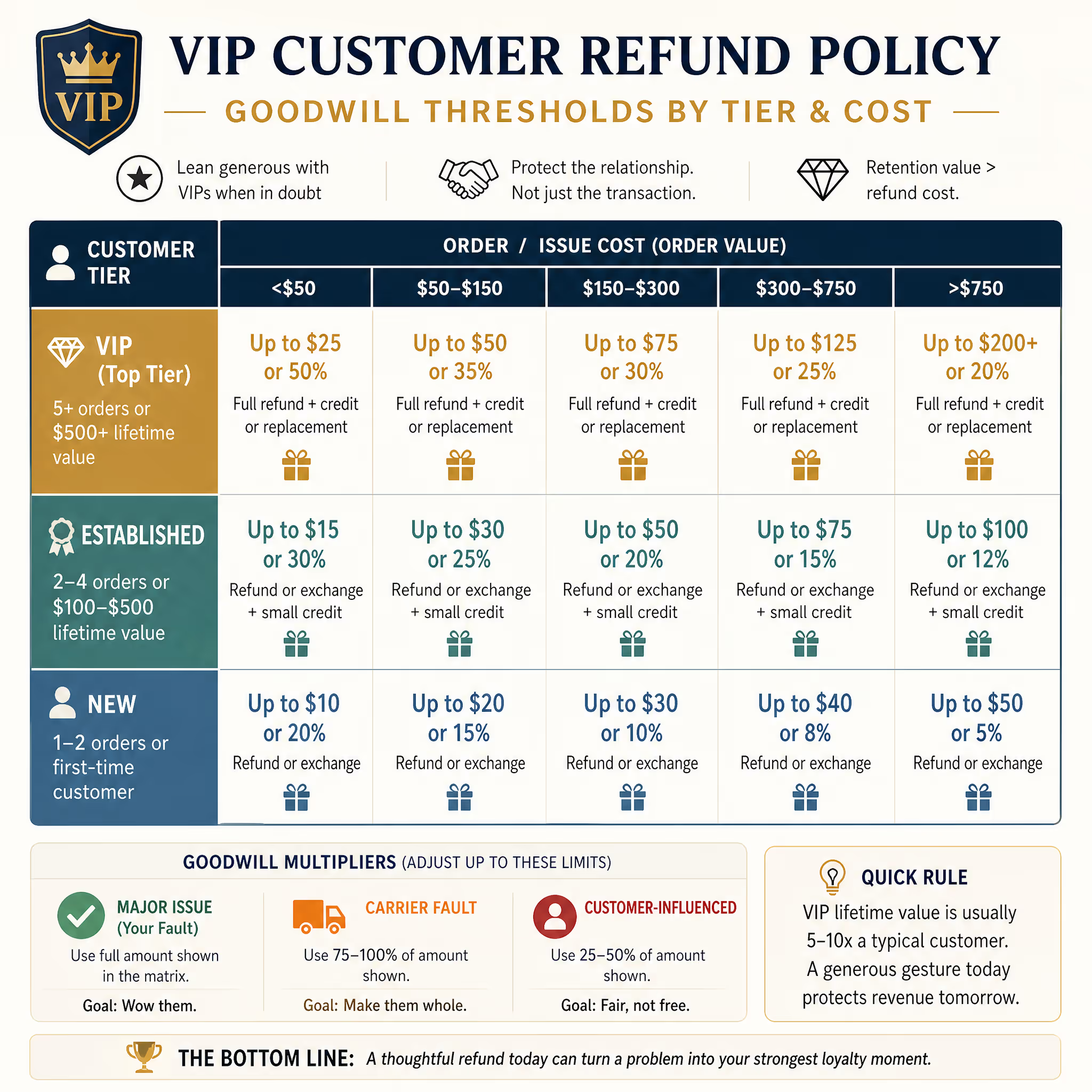
Every small business needs "goodwill thresholds"—pre-decided limits for when you'll exceed standard policy to preserve a relationship. Having these set in advance means you (or whoever handles support) can make fast, confident decisions without escalating every situation.
| Cost to You | VIP Customers | Established Customers | New Customers |
| Under $25 | Approve immediately | Approve immediately | Approve if polite and issue is legitimate |
| $25-$75 | Approve immediately | Approve, lean generous | Follow standard policy |
| $75-$150 | Approve, flag internally to address root cause | Offer resolution, document exception | Case-by-case |
| Over $150 | Case-by-case, consider creative solutions | Requires judgment, possibly split cost | Standard policy applies |
These thresholds should flex based on your margins and average order value. A business with 60% margins can afford more generous goodwill gestures than one operating on 20% margins.
The key insight: Having pre-set thresholds means whoever handles support can make fast decisions without agonizing over the "right" call or needing to escalate to you at midnight.
Store Credit Framing That Actually Works
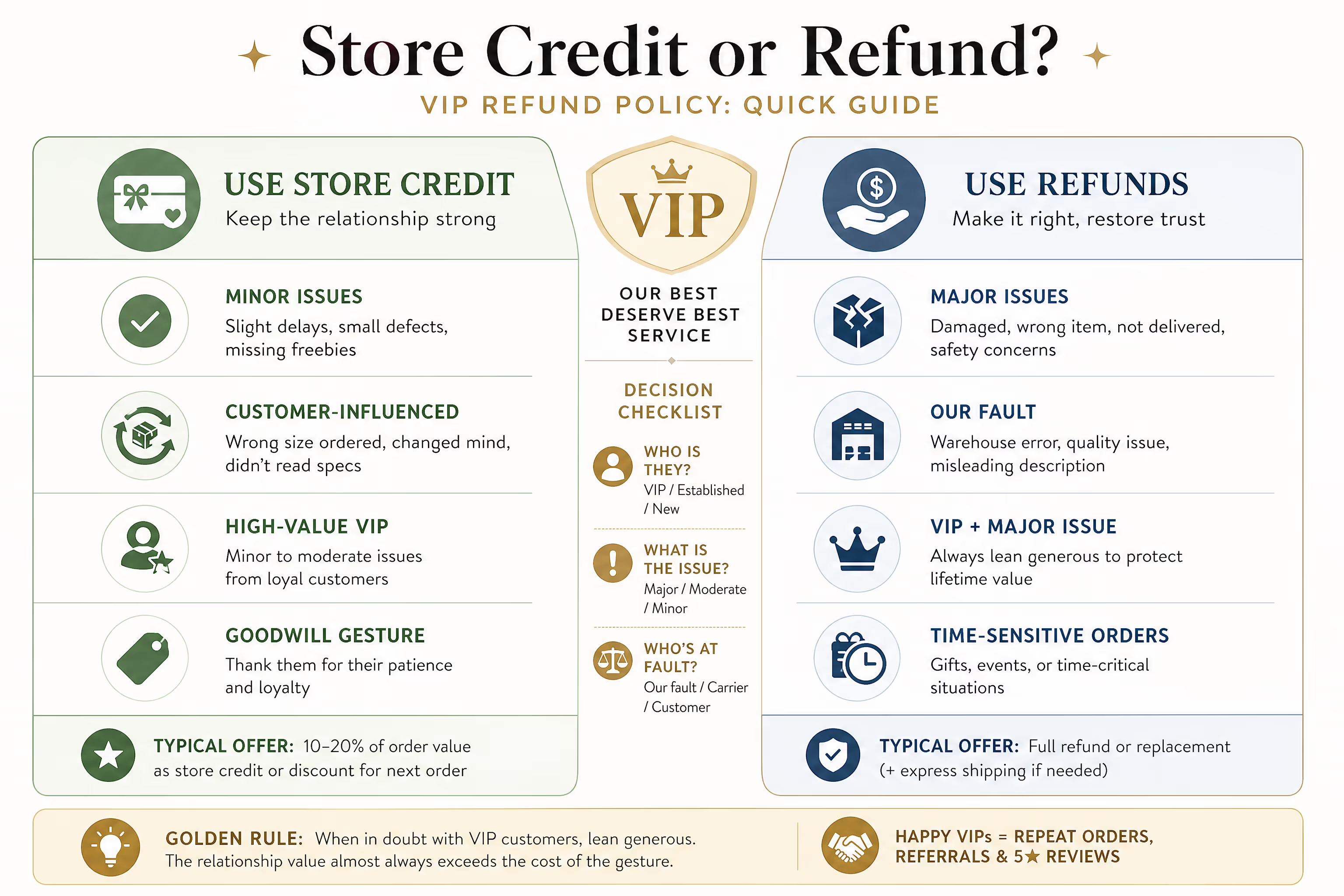
Store credit gets a bad reputation because it's often positioned as the consolation prize—the thing you offer when you don't want to give a real refund. But framed correctly, store credit can feel generous while keeping revenue in your ecosystem.
Poor framing:
"We can offer you a $15 store credit."
This sounds reluctant and limitation-focused.
Better framing:
"I'd like to add $15 to your account that you can use on anything in our store—no expiration, no minimum purchase."
This positions credit as a benefit with flexibility.
Best framing for VIPs:
"I've added $15 to your account as a thank-you for your patience. I've also made a note in your profile so our team knows to take extra care with your orders going forward."
This adds personalization and shows you're investing in the relationship long-term.
Store credit works best when:
The issue is minor to moderate
The customer will likely reorder anyway (check their purchase history)
You want to preserve margin while still providing value
The customer hasn't specifically demanded a refund
Store credit is the wrong choice when:
The customer explicitly asks for a refund (don't argue)
The issue is severe and clearly your fault
The customer seems unlikely to return regardless
You sense frustration that would be inflamed by perceived "store credit runaround"
Copy-Ready Email Templates
Template 1: VIP Customer, Major Issue, Your Fault
Subject: Making this right for youHi [Name],I just read your message and I'm genuinely sorry about this. Shipping you the wrong [item] is completely on us, and I know how frustrating that is—especially when you were counting on having it for [occasion/use if mentioned].Here's what I'm doing:I'm shipping the correct [item] today via [expedited shipping method], no chargePlease keep or donate the wrong item—no need to return itI've added a $[XX] credit to your account for your next orderYour tracking number will hit your inbox within a few hours.Thank you for being such a loyal customer. We'll do better.[Your name]
Template 2: VIP Customer, Carrier Damage
Subject: Replacing your damaged order todayHi [Name],I'm so sorry your [item] arrived damaged. That's not the experience you should have, regardless of what happened in transit.I'm sending a replacement out today—you should have tracking by end of day. If you'd prefer a refund instead, just reply and I'll process that immediately.For the damaged item, no need to send it back. If you can use any part of it, great; otherwise feel free to recycle or discard.We really appreciate your patience.[Your name]
Template 3: Established Customer, Moderate Issue
Subject: Let's fix thisHi [Name],Thank you for letting us know about the [issue]. You're right—that's not up to our standard.I'd like to offer you a couple of options:We can ship you a replacement right away. Just send the original back using the prepaid label I've attached.If you'd rather keep it as-is, I can refund [XX]% of your order and add a $[XX] credit for next time.Let me know which works better for you.[Your name]
Template 4: Customer-Influenced Issue (Ordered Wrong Size, etc.)
Subject: Re: [Original subject line]Hi [Name],Thanks for reaching out. I totally understand—it's frustrating when something doesn't work out the way you hoped.Here's what I can do: I'll send you a prepaid return label for the [item]. Once we receive it back, I can either:Exchange it for the correct [size/color/variant]Issue store credit for the full amount to use whenever you're readyJust let me know which you prefer, and I'll get things moving.[Your name]
Template 5: Minor Issue, Goodwill Gesture
Subject: A small thank-you for your patienceHi [Name],Thanks for mentioning the [minor issue]. I appreciate you taking the time to let us know—it helps us get better.I've added a $[XX] credit to your account as a thank-you for your patience. It's there whenever you'd like to use it, no expiration or minimum.Thanks again for being a customer.[Your name]
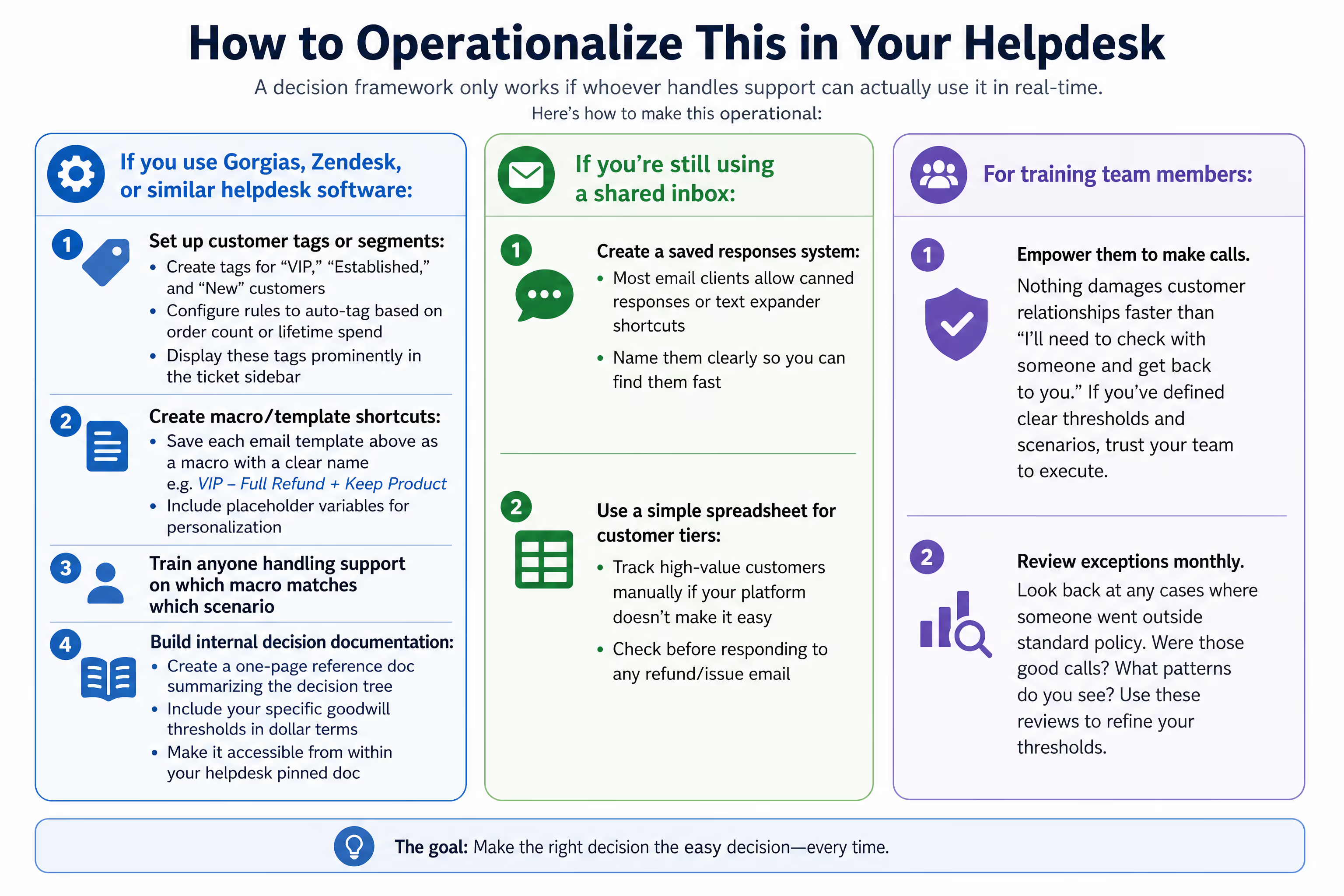
How to Operationalize This in Your Helpdesk
A decision framework only works if whoever handles support can actually use it in real-time. Here's how to make this operational:
If you use Gorgias, Zendesk, or similar helpdesk software:
Set up customer tags or segments:
Create tags for "VIP," "Established," and "New" customers
Configure rules to auto-tag based on order count or lifetime spend
Display these tags prominently in the ticket sidebar
Create macro/template shortcuts:
Save each email template above as a macro with a clear name (e.g., "VIP-Major-OurFault")
Include placeholder variables for personalization
Train anyone handling support on which macro matches which scenario
Build internal decision documentation:
Create a one-page reference doc summarizing the decision tree
Include your specific goodwill thresholds in dollar terms
Make it accessible from within your helpdesk (pinned doc, internal note, etc.)
If you're still using a shared inbox:
Create a saved responses system:
Most email clients allow canned responses or text expander shortcuts
Name them clearly so you can find them fast
Use a simple spreadsheet for customer tiers:
Track high-value customers manually if your platform doesn't make it easy
Check before responding to any refund/issue email
For training team members:
Empower them to make calls. Nothing damages customer relationships faster than "I'll need to check with someone and get back to you." If you've defined clear thresholds and scenarios, trust your team to execute.
Review exceptions monthly. Look back at any cases where someone went outside standard policy. Were those good calls? What patterns do you see? Use these reviews to refine your thresholds.
When Outsourcing Makes Sense for Service Recovery
If you're a founder still handling every refund email personally, you probably feel the tension: each decision takes mental energy that could go toward growing the business. But the decisions feel too important to hand off carelessly.
Here's the good news: service recovery is actually one of the most systematizable parts of customer support. Once you have clear thresholds, documented tiers, and template language, someone well-trained can execute your policy as effectively as you can—often more consistently, because they're not also juggling product development and marketing.
What to look for in outsourced support for service recovery:
Clear communication about your policies. They need to understand your goodwill thresholds and VIP definitions inside and out.
Authority to make decisions. Requiring escalation for every refund defeats the purpose of having support coverage.
Ongoing calibration. Regular check-ins to review decisions and ensure alignment with your values.
Documentation ownership. They should help build and maintain your internal support docs, not just follow them.
The right support partner handles the daily decisions while you focus on improving the root causes of issues and growing the business.
Your Next Step
If you're handling support yourself and the decision-making feels draining, it might be time to systematize your approach—or find someone who can help.
Request a free Inbox Audit from Evergreen Support. We'll review your recent support interactions, identify patterns in service recovery situations, and help you build a standardized policy that works for your business. If outsourcing makes sense, we can discuss how our team could handle these decisions on your behalf.
[Book your free Inbox Audit →]
Frequently Asked Questions
What if a VIP customer makes unreasonable demands?
Even VIP status has limits. If a customer consistently demands compensation beyond what's reasonable—or if you suspect abuse—it's okay to hold a firmer line. Document the history, respond professionally, and offer what's fair. Some "VIP" customers aren't actually valuable once you factor in the cost of serving them. Track lifetime support cost alongside lifetime revenue for your most demanding customers.
Should I always offer a refund if someone asks for one?
For legitimate issues, generally yes—especially for VIP customers. Fighting reasonable refund requests damages relationships more than the refund costs. However, for return requests with no issue (buyer's remorse, ordered wrong item), you can follow your standard return policy, which might include restocking fees or store credit only. The key is being clear and fair, not combative.
How do I handle situations where I'm not sure who's at fault?
When fault is ambiguous, lean toward the customer's benefit—especially for VIPs. The cost of being generous when you didn't need to be is almost always lower than the cost of being stingy when you should have been generous. Document ambiguous situations for pattern analysis later; if you see the same issue repeatedly, investigate the root cause.
How do I transition from handling all refunds myself to having someone else do it?
Start by documenting every decision you make for two weeks. Note the customer tier, issue severity, fault attribution, and your resolution. This creates a reference library. Then use that documentation to create your decision framework and train whoever takes over. Review their decisions weekly for the first month, then monthly thereafter. Give feedback on any decisions that didn't match what you would have done.
What if my margins are too thin for generous service recovery?
Thin margins mean you need to be more selective, not more stingy. Focus your generosity on truly high-value customers where the relationship math works. For lower-value customers, stick closer to policy. Also examine whether recurring issues are eating your margins—fixing root causes (better product photos, clearer sizing guides, improved packaging) is often cheaper than constant service recovery.
About Evergreen Support
We're a US-based customer support team that partners with small ecommerce and SaaS businesses. Our team handles email support so founders can focus on growth instead of inbox management. Every customer interaction is handled by real humans who learn your brand voice, follow your policies, and make decisions within the thresholds you set—including service recovery situations like the ones covered in this guide.
We offer month-to-month service starting at $600/month based on ticket volume, with a $1 onboarding trial so you can evaluate fit before committing.
Cited Works
[1] Reichheld, F. and Schefter, P. — "The Economics of E-Loyalty." Harvard Business School. https://hbswk.hbs.edu/archive/the-economics-of-e-loyalty
[2] Tax, S.S., Brown, S.W., and Chandrashekaran, M. — "Customer Evaluations of Service Complaint Experiences: Implications for Relationship Marketing." Journal of Marketing. https://www.jstor.org/stable/1252161


