

Last month, a SaaS founder told me she'd been answering customer emails at 11:47 PM—again. Her partner had stopped asking when she'd come to bed. Her product roadmap sat untouched. And every morning, forty-three new tickets waited in her inbox like a small, angry mob.
She knew a customer support agency could help. The math worked. The logic checked out. But she couldn't shake the fears: Would they actually understand her product? Would customers notice the difference? Wasn't this just something enterprise companies did?
Those fears kept her stuck for eight months. They're keeping thousands of small business owners stuck right now.
Here's what those eight months of hesitation actually cost: delayed product launches, slower response times, and a founder burning out on work that wasn't even her core business. The myths about outsourcing email support aren't just wrong—they're expensive.
This article dismantles the five most common myths about partnering with a customer support agency, replaces fear with evidence, and gives you a framework for evaluating whether outsourcing fits your business.
Myth 1: They Won't Know Our Product Well Enough
The fear runs deep. You've spent years understanding every edge case, every workaround, every quirk in your product. How could an outsider possibly learn all that in a few weeks?
This worry misunderstands how professional customer support agencies actually operate.
Quality agencies don't improvise. They invest heavily in structured onboarding because their reputation depends on accuracy. According to Deloitte's 2024 Global Outsourcing Survey, 88% of organizations using managed services report satisfaction with their outsourcing partnerships—compared to just 71% using traditional approaches [1]. That satisfaction gap exists because professional agencies have refined their knowledge transfer processes.
What proper onboarding looks like:
Knowledge base development: Your FAQs, troubleshooting steps, billing policies, and edge cases are documented before anyone touches a ticket
Response calibration: Agents shadow your existing replies, study your tone, and practice with real scenarios
Supervised ramp-up: The first two weeks involve heavy oversight, with every response reviewed before sending
Ongoing quality checks: Weekly ticket audits catch drift before it becomes a pattern
A bootstrapped mobile app founder I know worried his technical product was "too complex to outsource." His customer support agency spent three weeks in onboarding, built a 47-page knowledge base, and now handles 89% of tickets independently. The 11% that require his technical expertise get escalated—meaning he's freed from the routine while still handling the genuinely tricky stuff.
The real question isn't whether an agency can learn your product. It's whether you can document what you already know. If you can explain it to a new hire, you can explain it to a professional support team.

Myth 2: It's More Expensive Than Handling Support In-House
The sticker shock of agency pricing stops many founders cold. But this calculation ignores the most expensive line item in your business: your time.
Let's run the actual numbers.
The average small business owner spends 10-20 hours weekly on customer emails [2]. If your hourly value is $75—a conservative estimate for most founders—that's $750 to $1,500 weekly disappearing into your inbox. That's $39,000 to $78,000 annually in opportunity cost alone.
Now consider a full-time hire. According to the U.S. Bureau of Labor Statistics, the median hourly wage for customer service representatives was $20.59 in May 2024 [3]. For a full-time employee, that translates to roughly $42,800 in base salary. But salary is just the beginning:
| Cost Category | Annual Amount |
| Base salary (median) | $42,800 |
| Benefits (health, PTO, 401k) | $12,800–$17,100 |
| Recruiting and onboarding | $3,000–$5,000 |
| Management overhead | $5,000–$8,000 |
| Equipment and software | $2,000–$4,000 |
| Total Cost | $65,600–$76,900 |
That's for one person. Who takes vacation. Who calls in sick. Who can't handle volume spikes during your product launch.
Fractional support changes the equation entirely. According to industry data, companies report average cost savings of 15-30% through outsourcing compared to full-time employees [4]. Some analyses show savings reaching 40-50% when accounting for all hidden costs [5].
With fractional email support, you pay for the hours you actually need:
20 hours weekly during normal periods
35 hours weekly during your holiday rush
10 hours weekly during slow summer months
No awkward conversations about reducing someone's hours. No severance. No guilt.
An e-commerce founder I spoke with calculated that outsourcing her email support cost 63% less than her previous full-time hire when she factored in benefits, training time, and the productivity lost during her employee's two-week vacation.
Myth 3: We'll Lose Control Over Customer Relationships
Handing your inbox to someone else feels like surrendering the keys to your business. What if they say the wrong thing? What if they make promises you can't keep?
These concerns come from a reasonable place. But modern outsourcing doesn't mean losing control—it means extending your reach while maintaining oversight.
What you control with a professional customer support agency:
| You Control | The Agency Executes |
| Refund policies and criteria | Applying policies consistently |
| Response time targets | Meeting those targets daily |
| Brand voice and tone | Writing in your voice |
| Escalation triggers | Routing sensitive issues to you |
| Quality standards | Maintaining those standards |
According to Gartner's research, 84% of customers have higher expectations for service now than in the past [6]. Meeting those expectations requires consistent, quality responses—something that becomes harder when you're distracted by everything else your business demands.
The control framework in practice:
Policy ownership: You define refund criteria, response times, and escalation triggers before anyone touches a ticket
Voice calibration: A one-page brand guide captures your tone, preferred phrases, and language to avoid—with before/after examples showing exactly how you communicate
Weekly quality audits: Review 5-10 tickets together, provide feedback, and adjust as needed
Clear escalation paths: VIP customers, complex technical issues, and emotionally charged situations route directly to you
Research shows that organizations with mature vendor management achieve 20% or more cost savings compared to those without structured oversight [1]. Control isn't lost through outsourcing—it's formalized.
Myth 4: Customers Will Notice the Difference
This myth cuts deepest. You've built a reputation for personal, thoughtful service. Your customers know your voice. Won't they immediately sense when a stranger takes over?
Customers care about outcomes, not organizational charts.
When someone emails with a problem, they want three things:
Acknowledgment that they've been heard
Speed in getting a resolution
Accuracy in the answer they receive
None of these require the founder personally typing the reply.
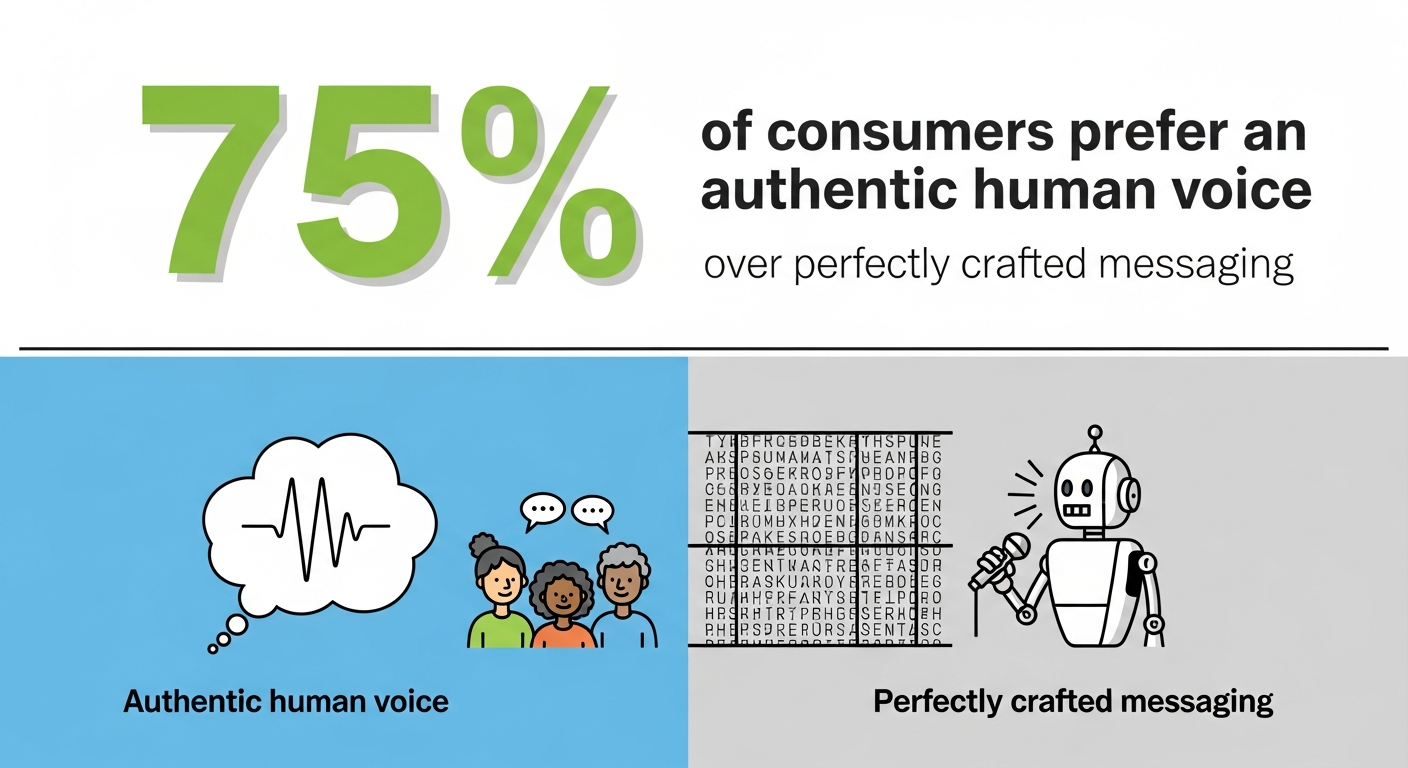
Research from Khoros found that 75% of consumers prefer an authentic human voice over a perfectly crafted brand message [7]. The emphasis is on human—not specifically you. PwC research shows customers will pay up to 16% more for superior customer experience [8]. What defines "superior" isn't who writes the email—it's whether the email solves their problem quickly and kindly.
Voice matching is a trainable skill. Professional support writers:
Study your existing email responses
Internalize your patterns (when you use contractions, how you handle frustrated customers, whether you sign off with "Best" or "Cheers")
Practice with real scenarios until responses are indistinguishable from your own
Receive ongoing feedback to prevent voice drift
What customers actually notice is response time. Nearly half of all customers expect email responses within four hours [9]. If you're consistently taking a day or two because you're drowning in other work, customers notice that delay far more than they'd notice a skilled professional responding quickly in your voice.
The SaaS founder I mentioned earlier? After three weeks of calibration, she tested her customers with a survey. Not a single respondent detected any change in support quality. Several commented that response times had improved.
Myth 5: Only Big Companies Outsource Customer Support
This myth persists despite being completely detached from current reality.
The data tells a different story. According to Deloitte's 2024 survey, 80% of executives are planning to maintain or increase investment in third-party outsourcing [1]. More significantly, 37% of small businesses worldwide leverage outsourcing—and that number has been climbing steadily [4].
In the US alone, 66% of companies report outsourcing at least one department [10]. These aren't just Fortune 500 firms with massive budgets. They include startups, bootstrapped businesses, and lean teams looking to compete without burning out.
Small businesses actually benefit more from outsourcing in some ways:
Large enterprises have resources to build extensive internal teams and absorb overhead
Small businesses often can't—which makes fractional support especially valuable
A two-person e-commerce company gets the same coverage during their Black Friday rush as a company with a 50-person support team. A solo SaaS founder can take a vacation knowing someone's watching the inbox.
The outsourcing model has evolved specifically to serve smaller clients:
Fractional arrangements let you buy exactly the capacity you need
Some agencies specialize in bootstrapped businesses, understanding the constraints VC-backed startups don't share
Onboarding processes have shortened as agencies have refined their playbooks
Month-to-month contracts reduce commitment risk
If anything, lean teams have more to gain from a customer support agency than enterprise companies. The time you reclaim goes directly back into growth activities—not into layers of middle management wondering where the savings went.
Red Flags: How to Spot a Bad Customer Support Agency
Not every agency deserves your trust. Before signing anything, watch for these warning signs:
🚩 Unrealistic promises without assessment
Quality agencies ask detailed questions about your business before quoting. If someone offers a price without understanding your ticket volume, product complexity, or coverage needs, they're guessing—or desperate [11].
🚩 No clear onboarding process
Ask specifically: "What does your onboarding look like?" If the answer is vague or involves phrases like "we'll figure it out as we go," walk away. Professional agencies have documented, repeatable processes.
🚩 High employee turnover
Agencies with high attrition mean constant retraining and inconsistent quality. Ask directly about their retention rates. Good agencies retain talent because they pay and treat people well [12].
🚩 Resistance to quality reviews
Any reluctance to share ticket samples, performance metrics, or participate in regular calibration sessions signals a lack of confidence in their own work.
🚩 One-size-fits-all solutions
If they're offering the same package to an e-commerce brand and a B2B SaaS company without customization, they don't understand that different businesses have different needs.
🚩 No coverage for scope gaps
What happens when your primary agent is sick? Professional agencies have team backup coverage. If there's no answer to "who handles my tickets when my agent is unavailable," that's a single point of failure.
Questions to Ask Before Signing
When evaluating a customer support agency, these questions reveal more than their marketing materials:
About onboarding:
How long is your typical onboarding period for email support?
What documentation do you need from us to get started?
How many clients have you onboarded with products similar to ours?
About quality:
How do you measure response quality?
How often do you review tickets, and how is feedback incorporated?
Can I see anonymized examples of work you've done for similar businesses?
About flexibility:
What's your minimum commitment period?
How do you handle volume spikes during promotions or launches?
What's the process if we need to scale down?
About team structure:
Will we have a dedicated agent, or a team?
What happens when our primary agent is unavailable?
What's your average employee tenure?
The Decision Is Yours

The myths about customer support agencies exist because outsourcing used to work differently. Legacy call centers with untrained agents reading scripts gave the entire industry a bad reputation. Those experiences were real, and the frustration they caused was valid.
But email support in 2025 looks nothing like phone support in 2005. Specialized agencies with trained writers, robust onboarding, and quality assurance systems deliver results that match or exceed what most small businesses can do internally—often at a fraction of the cost.
You don't have to outsource anything. Some founders genuinely enjoy customer support and want to keep doing it themselves. That's a valid choice.
But if your inbox has become a second full-time job—if you're answering tickets at 11:47 PM, missing response time targets, and watching your actual work pile up—these myths shouldn't be what stops you.
Ready to explore what a customer support agency could look like for your business? Learn more about our approach or check out our pricing options to see if it's a good fit.
Frequently Asked Questions
How long does it take to onboard a customer support agency for email support?
Most professional email support agencies complete onboarding within two to four weeks. This includes knowledge base development, voice calibration, supervised ticket handling, and quality calibration. The timeline depends on your product complexity and how well-documented your current processes are. Agencies working with well-organized knowledge bases can often go live faster.
What if the agency makes a mistake that upsets a customer?
Reputable agencies have clear escalation protocols for exactly this scenario. Significant issues get flagged immediately so you can intervene. More importantly, weekly quality reviews catch patterns before they become problems. Because you maintain control over policies and voice guidelines, mistakes tend to be minor and quickly corrected rather than relationship-ending.
Can I start with limited hours and expand later?
Yes—this is one of the primary advantages of fractional email support. Many small businesses start with 10-20 hours weekly and increase coverage as they gain confidence in the partnership. Scaling up typically takes days, not weeks, since the agency already knows your product and voice.
What's the difference between a customer support agency and a virtual assistant?
Customer support agencies employ specialized support writers with established processes, quality assurance systems, and team backup coverage. Virtual assistants are typically generalists handling various tasks without specialized support training. For dedicated email support, agencies generally deliver better consistency with less founder oversight required.
How do I know if my business is ready to outsource email support?
Three indicators suggest readiness: (1) You're spending 10+ hours weekly on support tickets, (2) your response times have slipped beyond your target, or (3) customer support is consistently pulling you away from growth work. If any of these apply, your business has likely outgrown DIY support.
About Evergreen Support
Evergreen Support provides human-first email support services designed specifically for small, bootstrapped online businesses. Our team of experienced support specialists works exclusively with SaaS startups, e-commerce brands, and mobile app companies—learning your product deeply and matching your voice precisely. With flexible fractional coverage, transparent pricing, and a commitment to sounding exactly like you, we help overwhelmed founders reclaim their time without sacrificing the customer relationships they've built.
Works Cited
[1] Deloitte — "Global Outsourcing Survey 2024: Multidimensional Sourcing." https://www.deloitte.com/us/en/services/consulting/articles/global-outsourcing-survey.html
[2] Helpware — "10 Benefits of Outsourcing Customer Service in 2025." https://helpware.com/blog/benefits-of-outsourcing-customer-service
[3] U.S. Bureau of Labor Statistics — "Occupational Outlook Handbook: Customer Service Representatives." https://www.bls.gov/ooh/office-and-administrative-support/customer-service-representatives.htm
[4] MyOutDesk — "35 Outsourcing Statistics For 2025." https://www.myoutdesk.com/blog/outsourcing-statistics/
[5] Working Solutions — "Cost of Outsourcing Customer Service: Pricing Models & Savings Guide." https://workingsolutions.com/blog/how-much-does-it-cost-to-outsource-customer-service/
[6] Gartner — "Gartner Predicts Third-Party GenAI Will Resolve 40% of Customer Service Issues by 2027." https://www.gartner.com/en/newsroom/press-releases/2024-12-16-gartner-predicts-unofficial-third-party-tools-powered-by-genai-will-resolve-40-percent-of-customer-service-issues-by-2027
[7] Khoros — "Must-Know Customer Service Statistics of 2024." https://khoros.com/blog/must-know-customer-service-statistics
[8] PwC — "Experience Is Everything: Customer Experience Survey." https://www.pwc.com/us/en/services/consulting/library/consumer-intelligence-series/future-of-customer-experience.html
[9] Prialto — "2025 Outsourcing Statistics and Trends." https://www.prialto.com/blog/outsourcing-statistics-trends
[10] Prialto — "2025 Outsourcing Statistics and Trends." https://www.prialto.com/blog/outsourcing-statistics-trends
[11] Infinit-O — "10 Red Flags to Avoid When Looking for an Outsourcing Provider." https://resourcecenter.infinit-o.com/blog/outsourcing-red-flags/
[12] HelpSquad — "Red Flags in BPO Outsourcing Company: A Guide." https://helpsquad.com/bpo-company-red-flags/